Today, we spent most of the day in the City of David, which is also called the Old City.
We walked through the Zion Gate at one point, which if you see the holes throughout the wall, know that is not the result of being old…it’s the result of being shot at (during the Six Day War and Independence War).
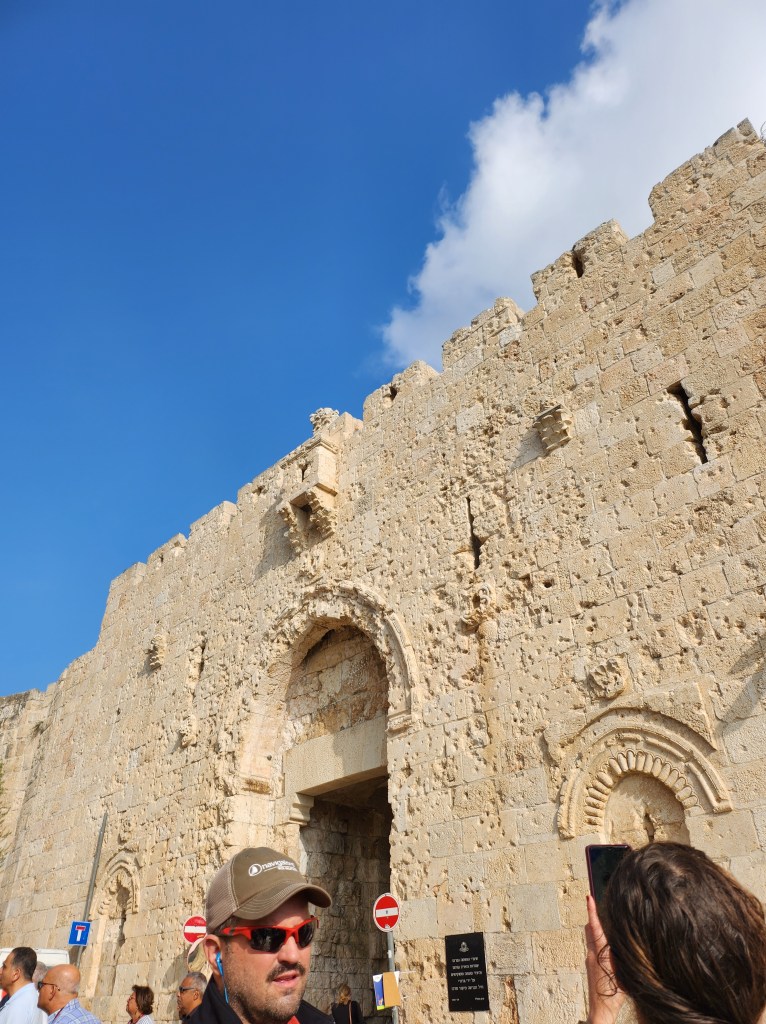
We walked through the city until we arrived at our first stop!

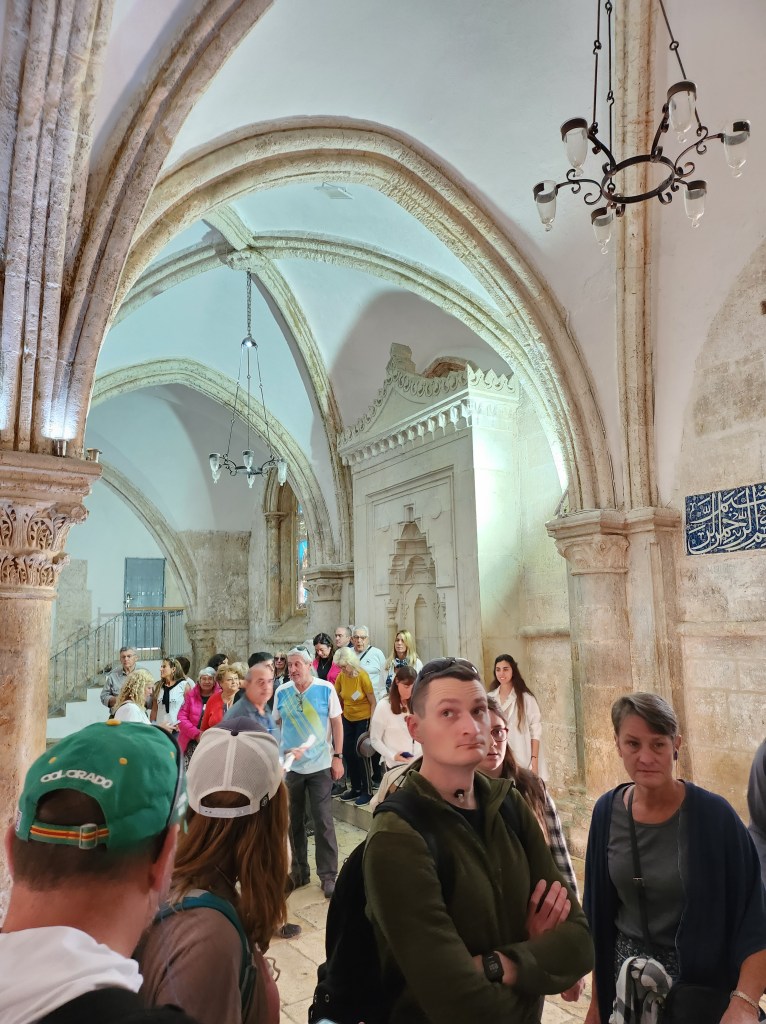
In Israel, most places that are significant in relation to Jesus have a church built on top of them. This was the church that was built where they believed the Upper Room to be, where Jesus and the Twelve celebrated Passover (also known as The Last Supper).
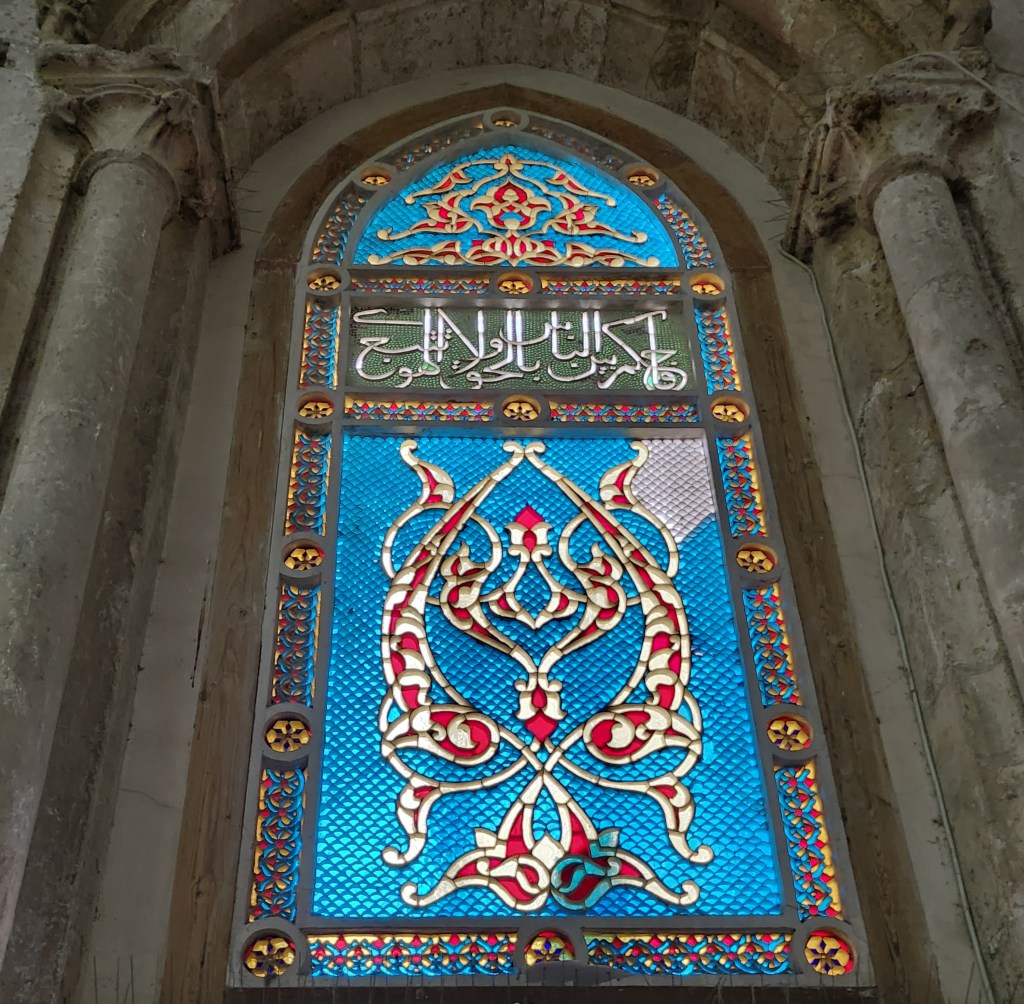
This stained glass was beautiful! You’ll notice the Arabic writing.
Many places, as they’ve been conquered, will take on whichever culture has control over the place. When a new one comes in, evidence still remains of people and places past. This is why excavation is so rich in Israel- so many people have lived in this area over the eras!
We went up to the roof and our guide, Tsuriel, walked up through how that significant meal would go down!
One thing of note: we are not recreating the famous painting of The Last Supper; we are lying down, not sitting at a table! Thus this how it would have really looked, minus a few mistakes!

Today was a lot of walking and it was at a faster pace than what we’d been keeping with Arie as his nephew, Tsuriel, led our group instead!
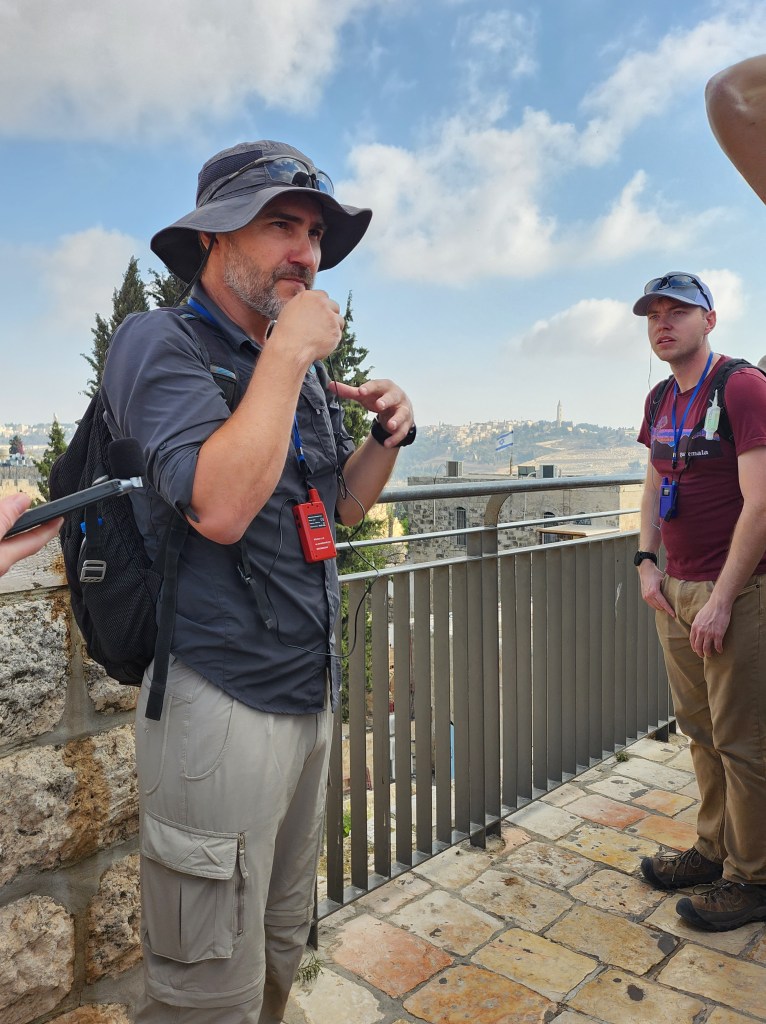
I enjoyed hearing his perspective and appreciated that there was still a lot of overlap between Arie and Tsuriel!
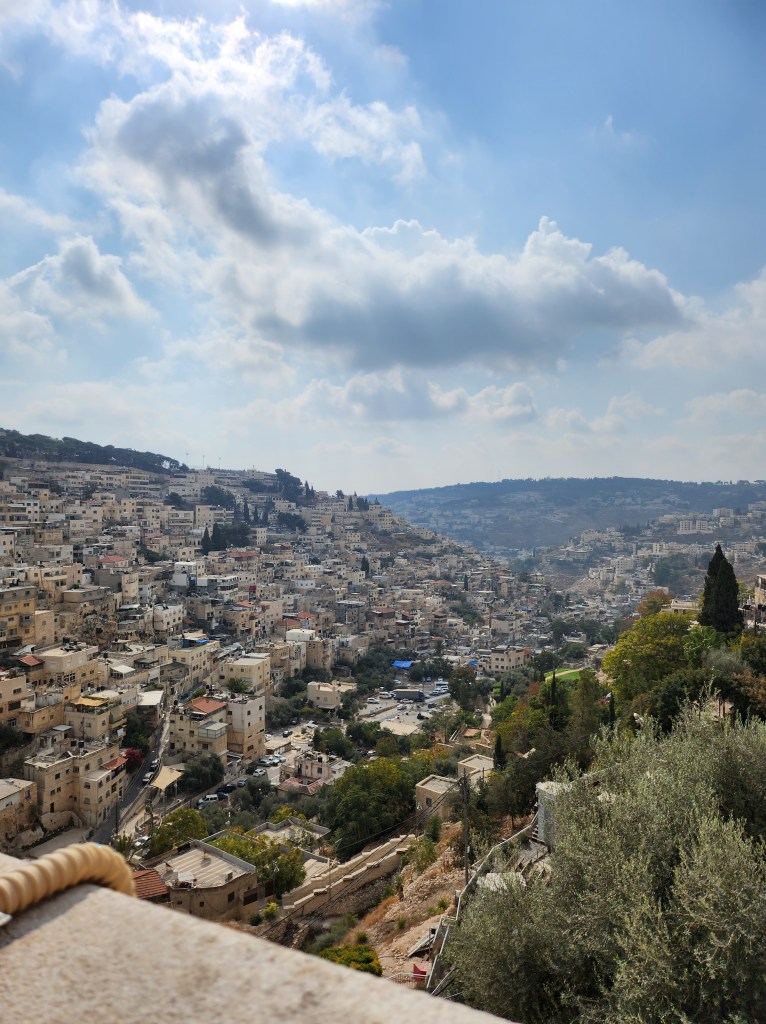
We overlooked the City of David and got oriented to where previous locations were in relation to us!
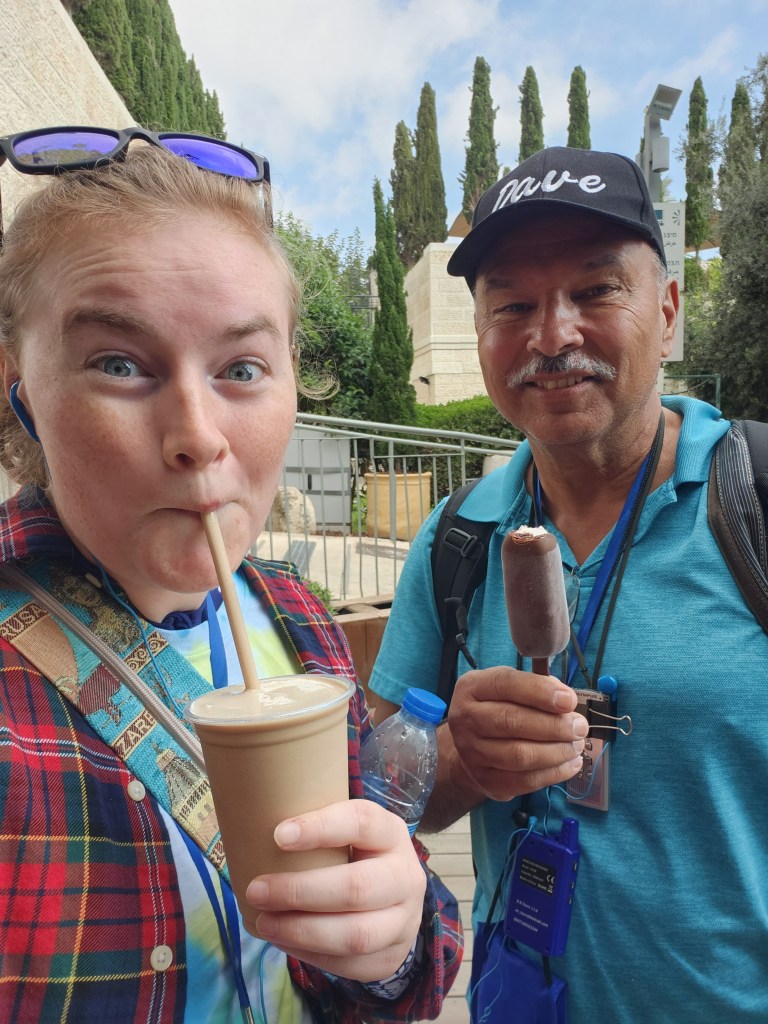
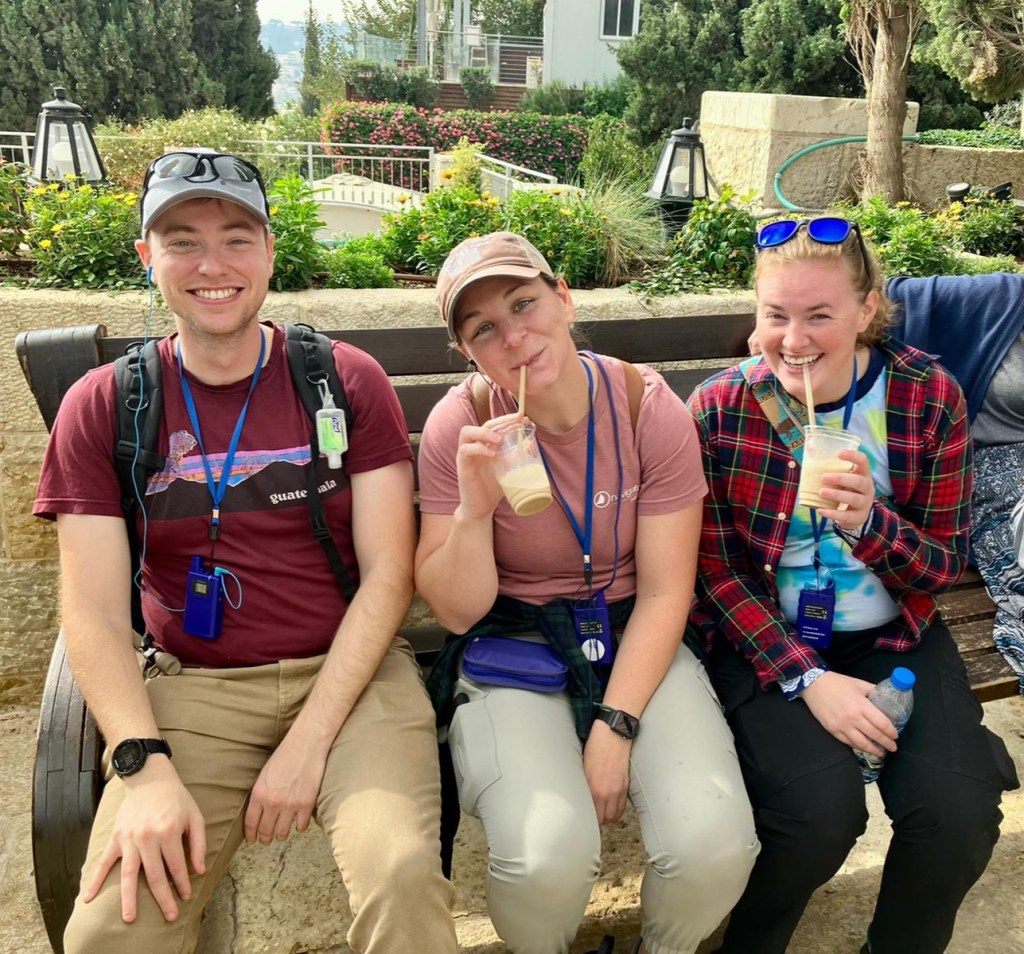
We all took the first opportunity to grab something refreshing, my choice being an iced coffee!
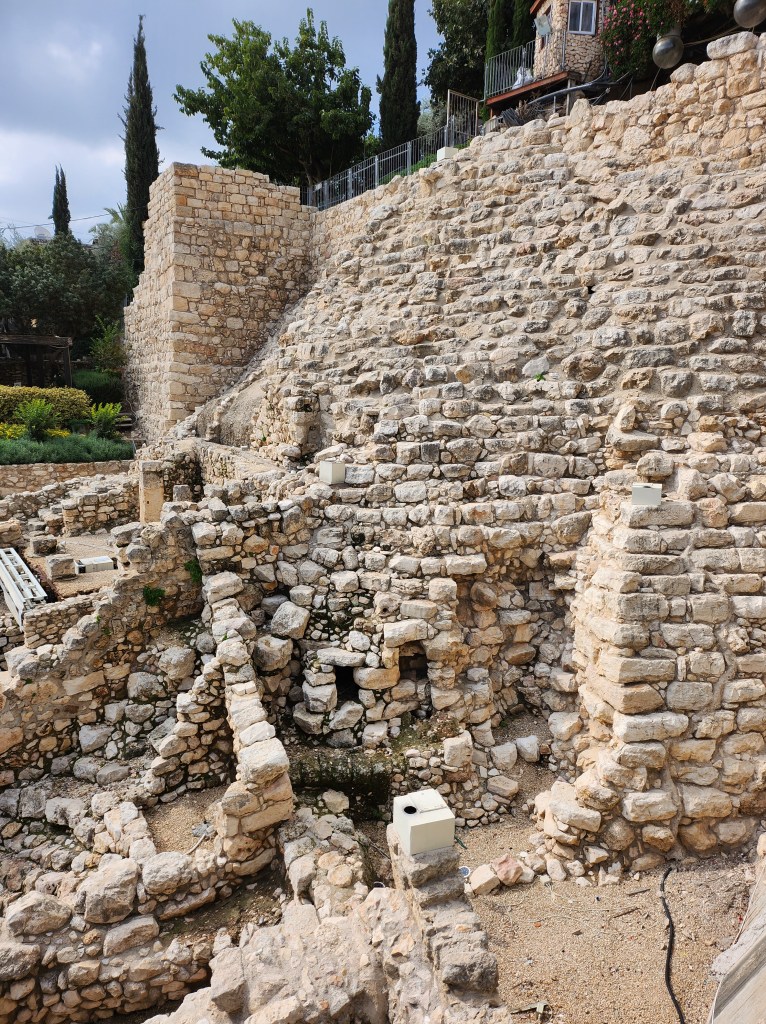
We saw an area where ruins from the city in different time periods were evident, almost like layers of a cake!
We then trekked through Hezekiah’s tunnel, which is 533 meters long, in water that sometimes came up above my knees.
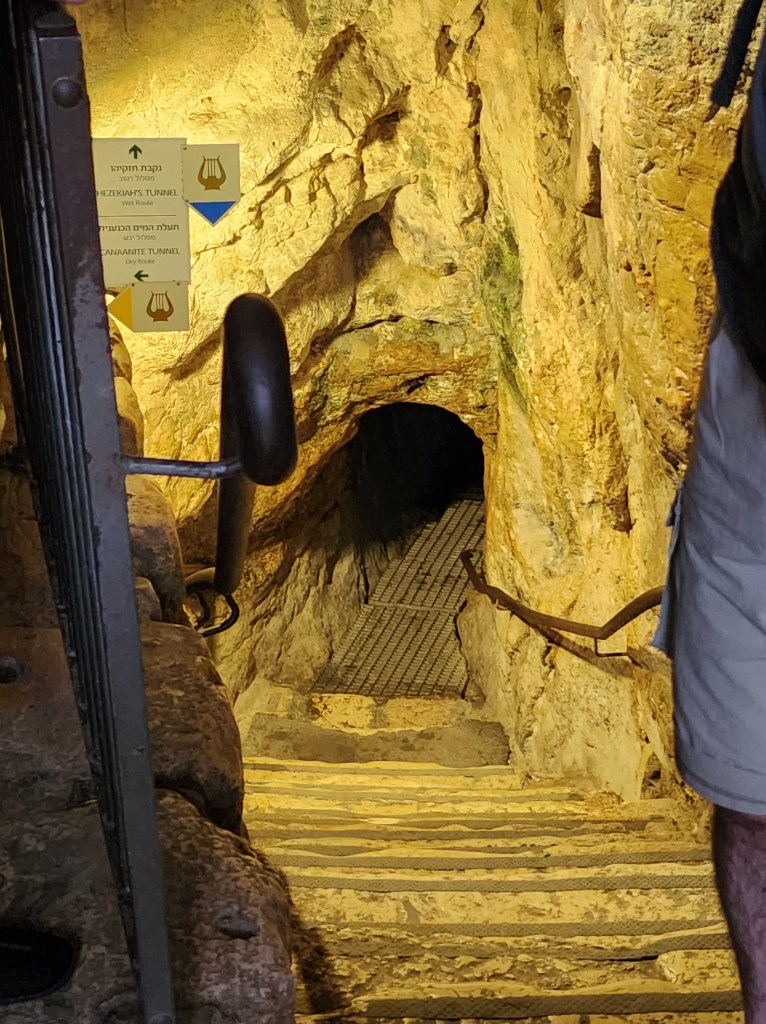
My section did a good portion of it completely in the dark, guided only by the calls of the one in front of us and with one hand on the ceiling, another on one of the walls.
We passed the time by singing songs and trying to imagine what it would have been like for those that both dug the tunnel and used it.
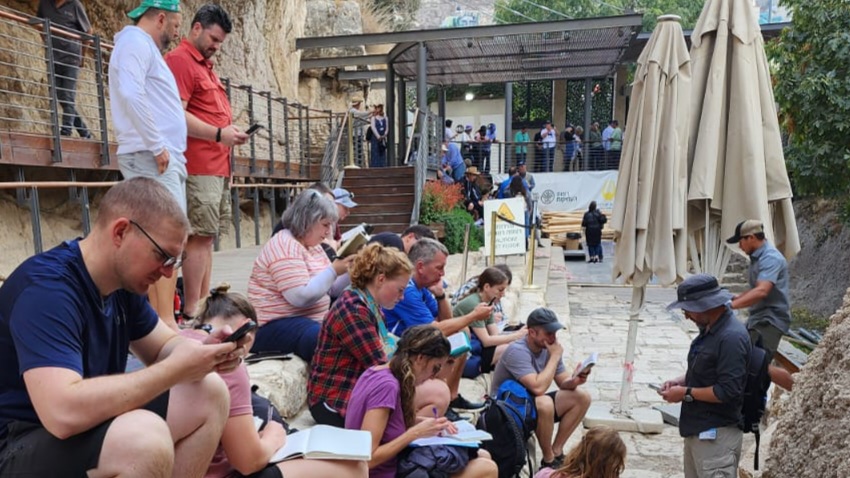
We all made it out the other side and warmed ourselves in the light as Tsuriel walked us through John 9, as the pool of Siloam feeds from the spring of Hezekiah’s Tunnel!

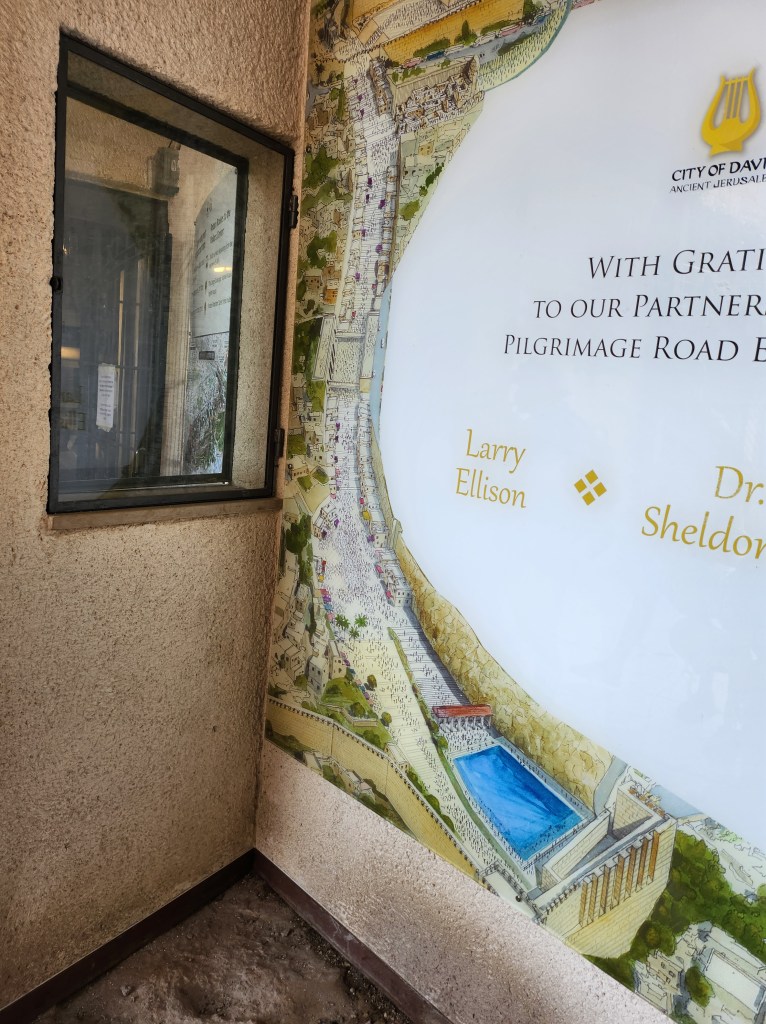
The Pool of Siloam is 1/2 a mile from the Temple (demonstrated in the illustration), which is a pretty far walk for a blind man in a bustling city.
However, the man was willing to take Jesus at His word and he was healed!
We stopped to appreciate some ruins that had, until somewhat recently, once been under a parking lot!
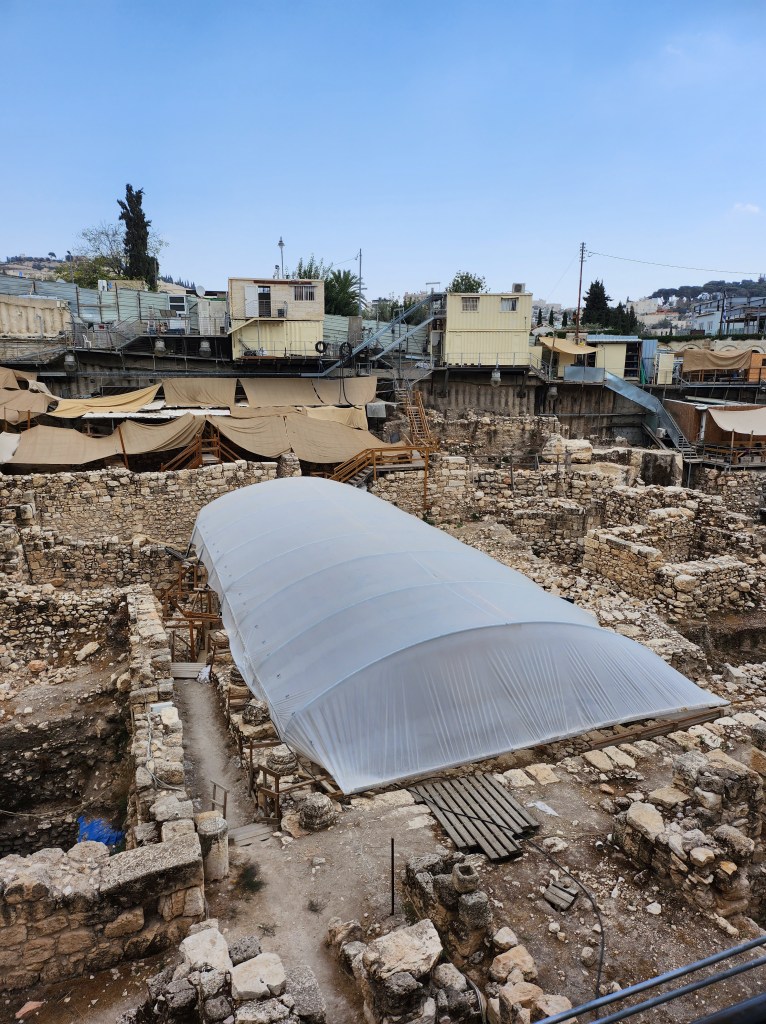
Apparently, an American volunteer was helping with the excavation and discovered a pile of coins hidden within one of the walls!
Afterwards, we continued on up the drainage tunnel, which was precarious in its own right. Like with Hezekiah’s Tunnel, we played a long game of telephone to help those behind us avoid rolling ankles or falling.
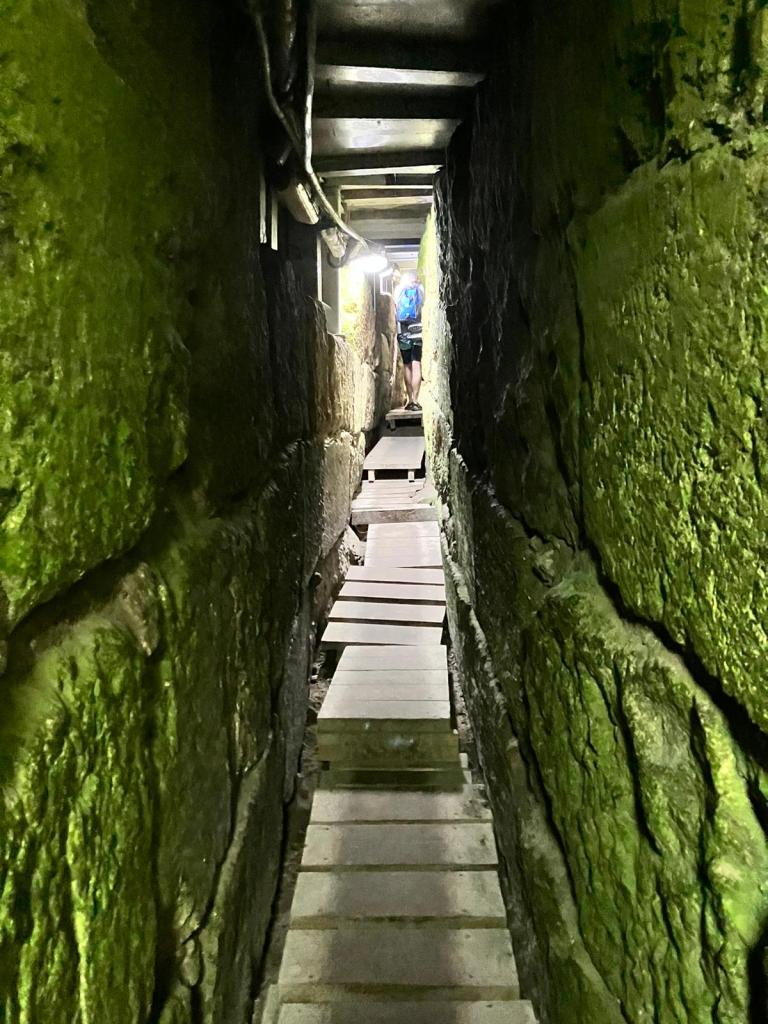
It was an uphill climb, again at a pretty good pace, so we were all panting by the end of it!
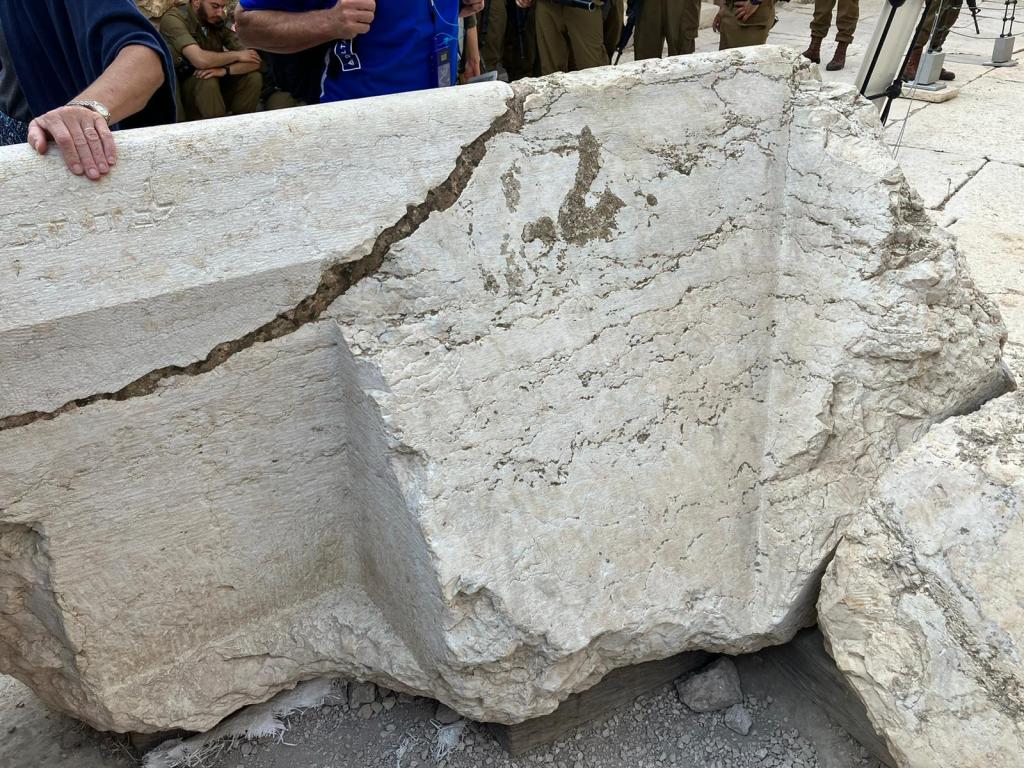
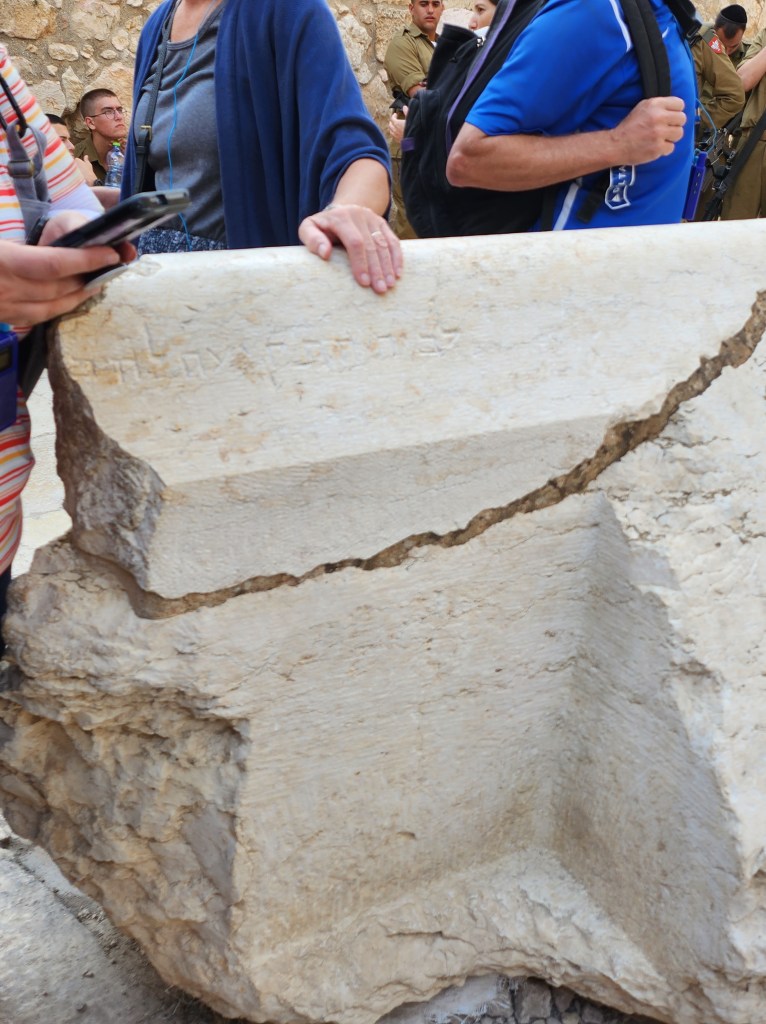
When we reached the top, there were some ruins from the Second Temple’s destruction.
One piece of note was this corner piece. There is Hebrew script on it, indicating that this is where the horn was blown to start Shabbat!
Here, Tsuriel is explaining just how far we traveled via Hezekiah’s Tunnel!
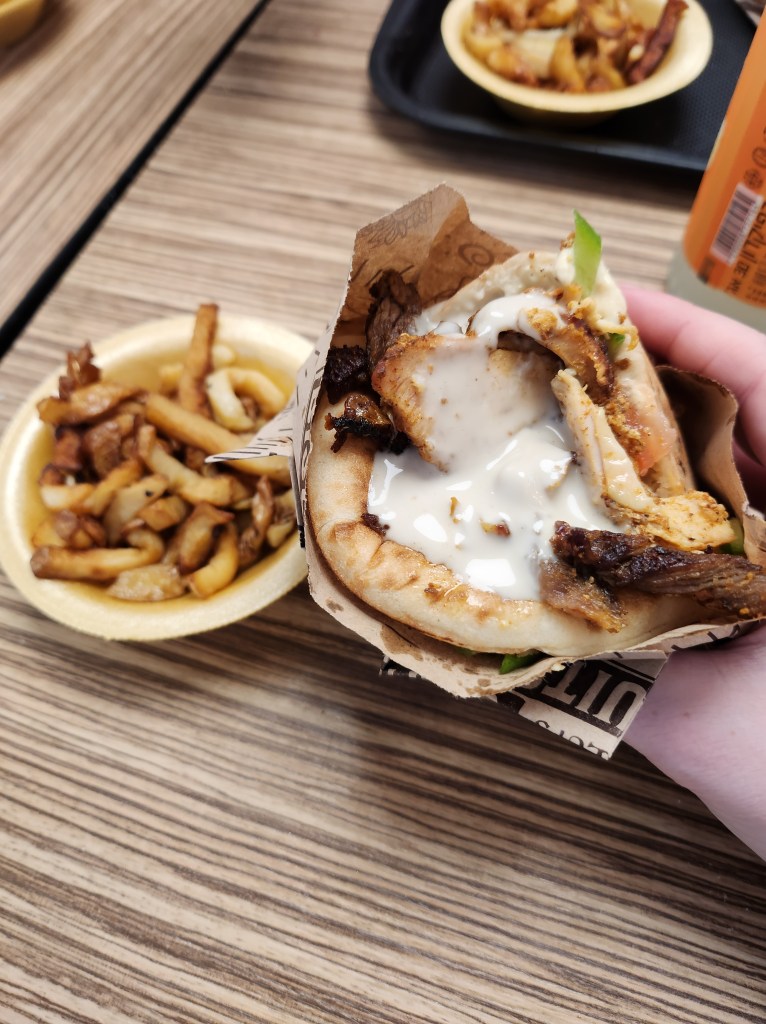
For lunch, we had some delicious shwarma, which still remains one of my favorite dishes in Israel!
We learned about Hinom Valley, which is on the outer side of Mount Zion. It’s name is where we get the word “Hell” and rightly so. It was where infants were sacrificed to Molech and trash was dumped, so the senses were all engaged with how “hellish” the place was.
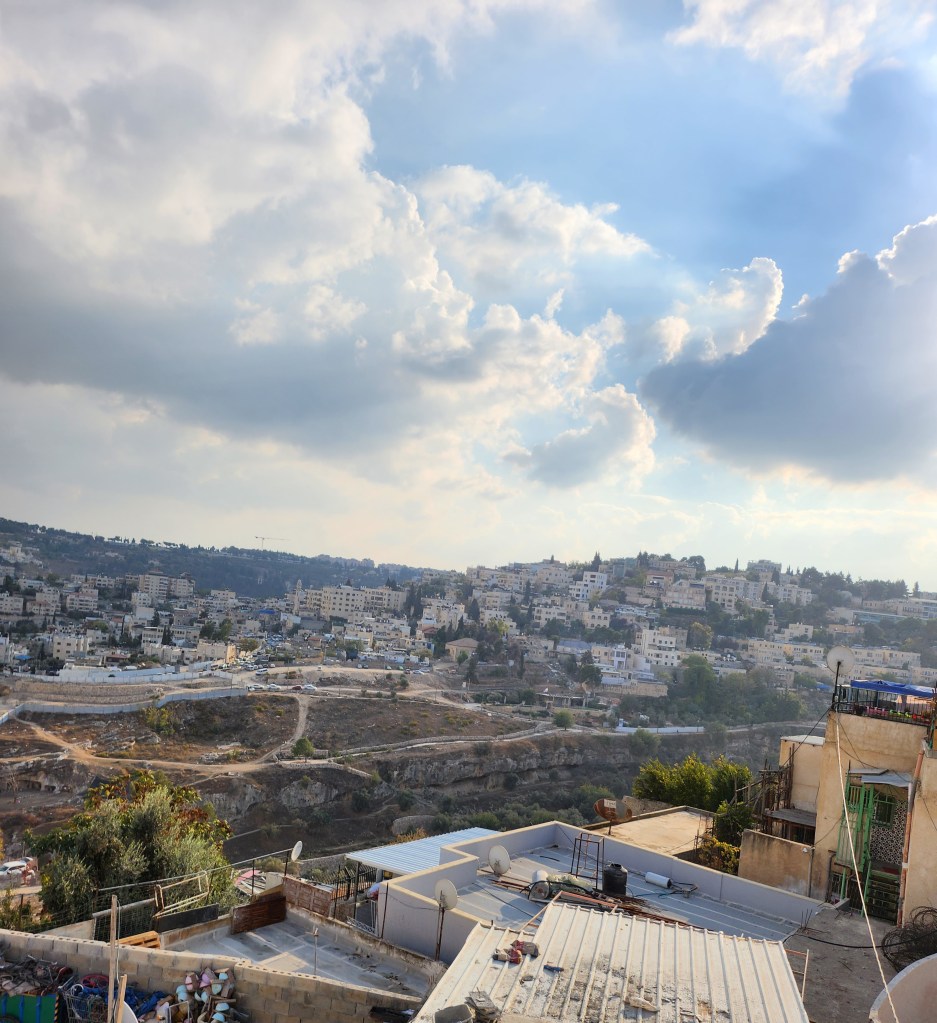
We then went to the location where it is believed Caiaphas’ house was and where Jesus was interrogated by the Jewish leaders.
There, we sat in John 18 and walked throughbwhat that night might have looked like for Jesus and His disciples.
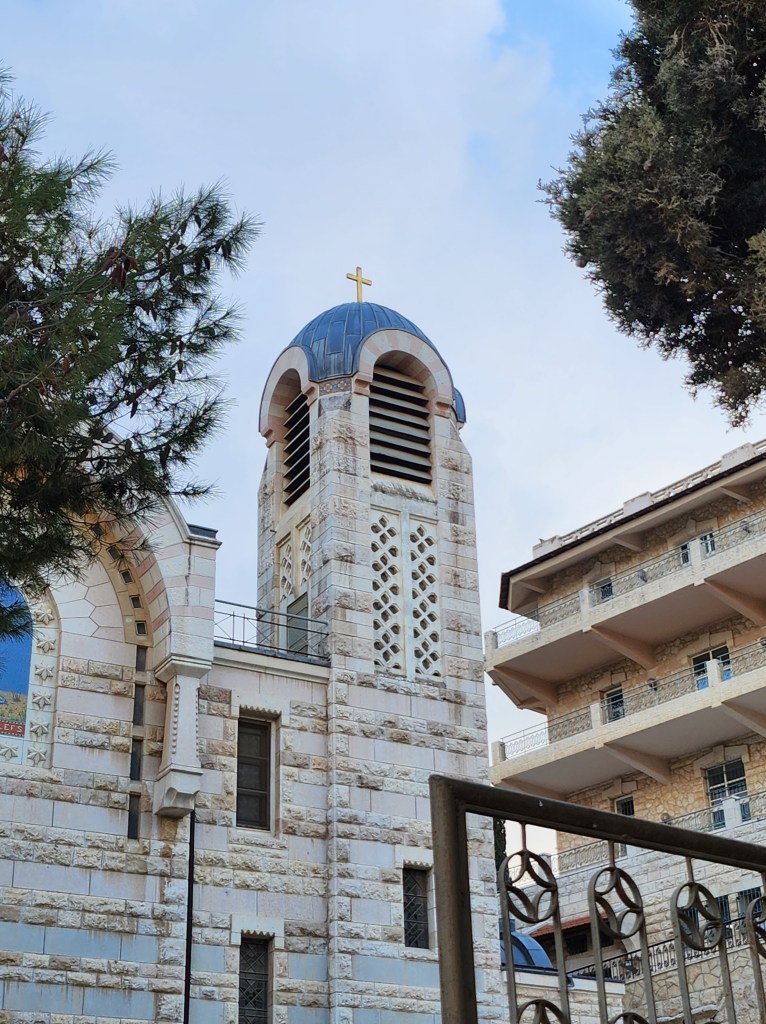
Of course, there’s a church commemorating the site.
We then traveled to the Southern Steps, which was probably the route Jesus traveled when going to to the Pool of Siloam.
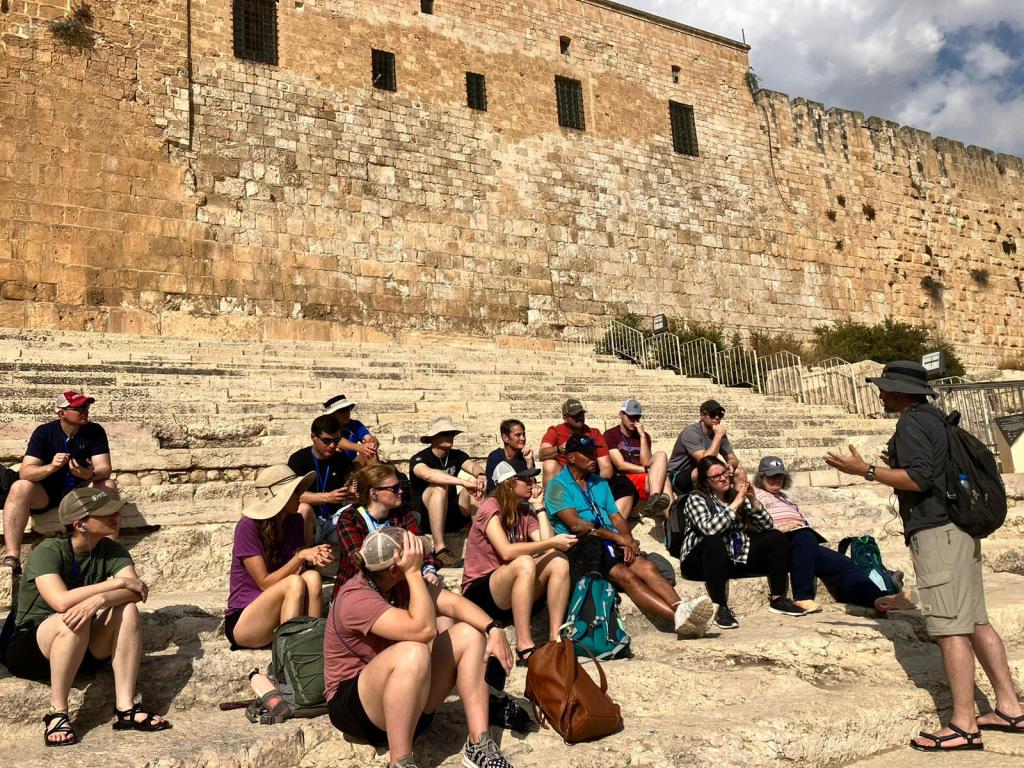
More to come. More to learn. More to remember!
 Sightseeing Sonographer