Remember me telling you that we calculated out that we had walked 43 miles thus far? Here’s the result of it (well, me wearing Chacos that needed to be adjusted didn’t help much either).
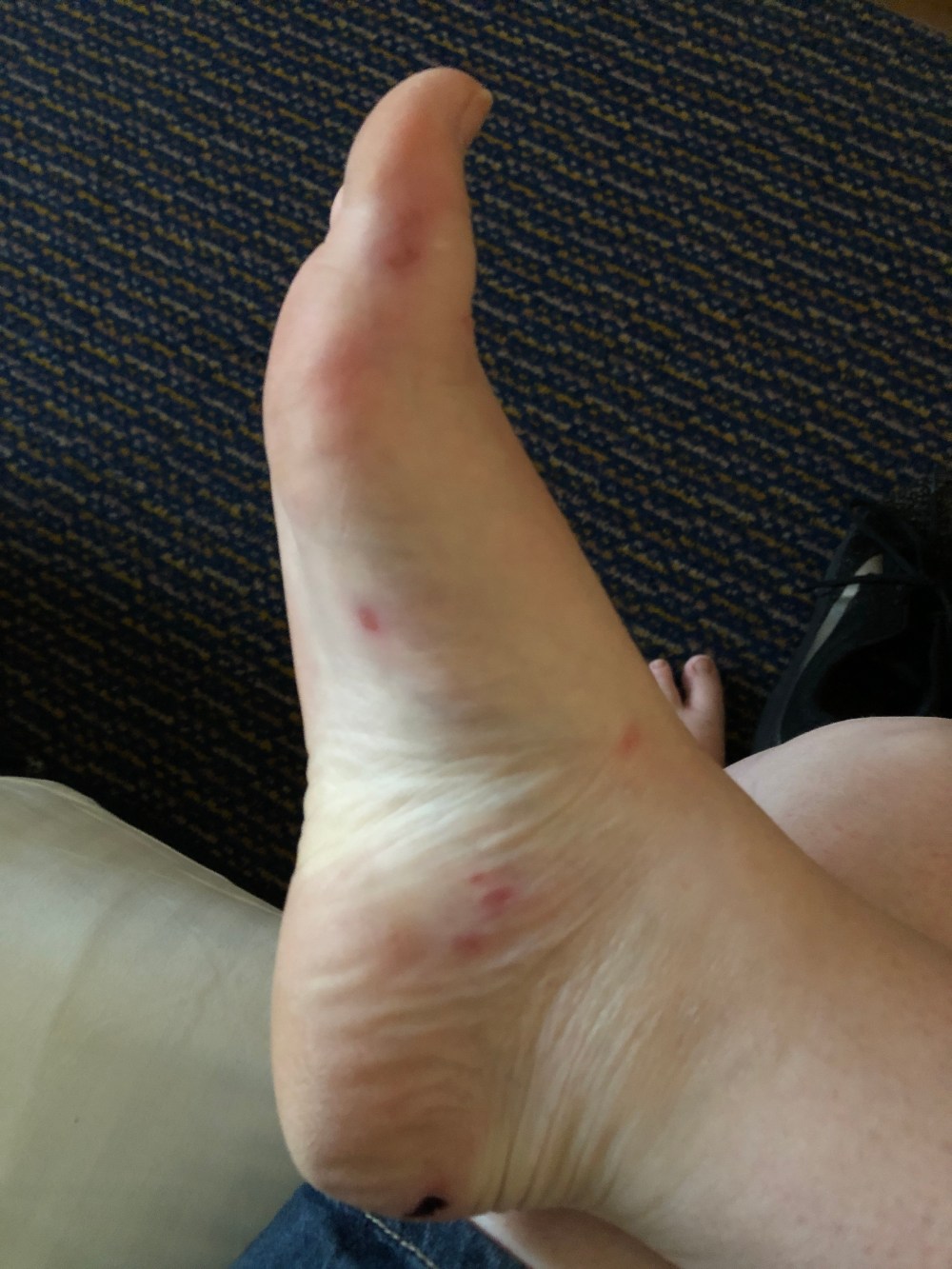
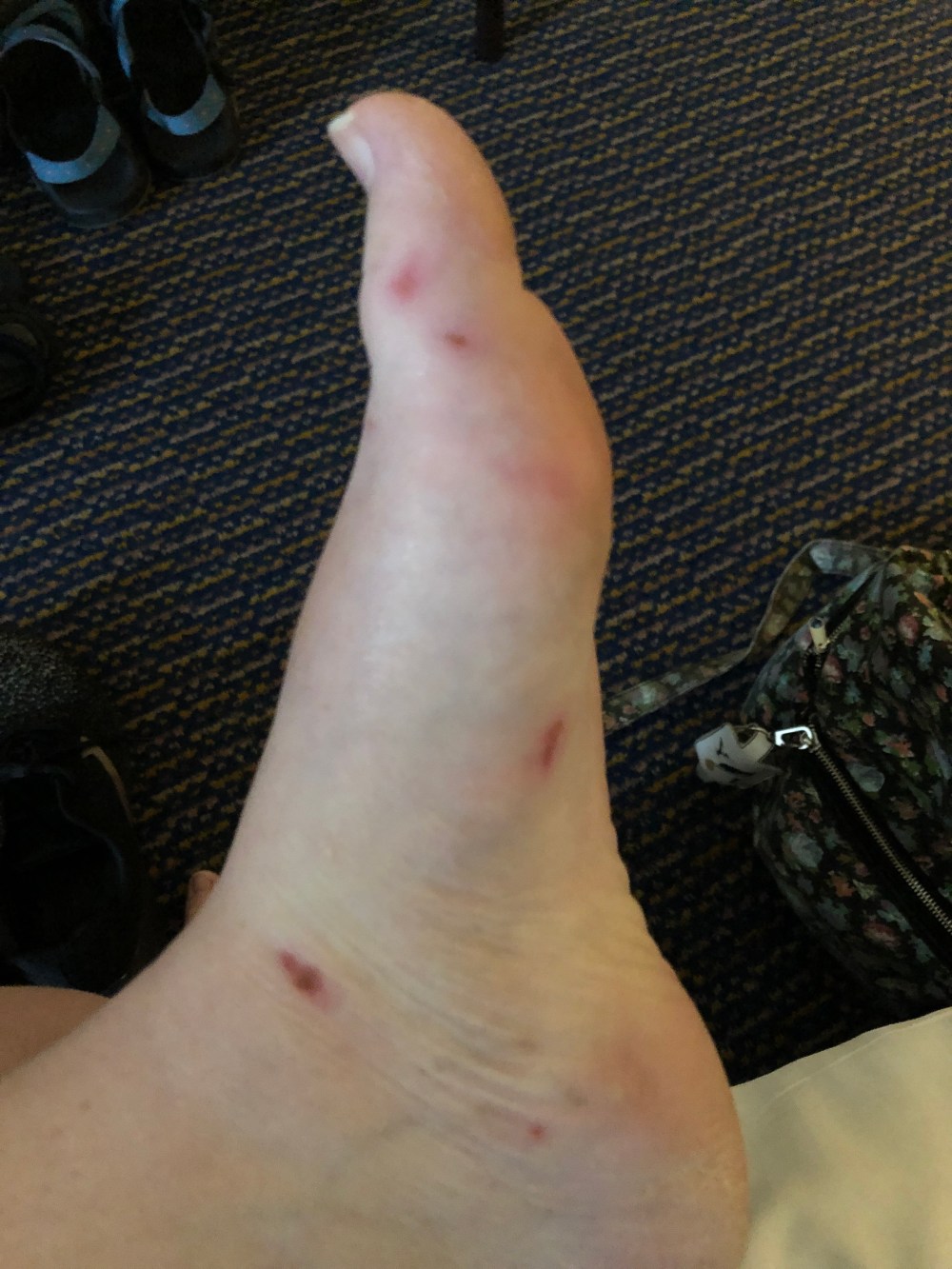 Luckily, we spent more travel time on the bus than on our feet, so they got a break and a chance to heal.
On our way to our first stop, we passed by several notable places mentioned in the Bible. One was Kiran Ye’arim, where the ark of the covenant was kept for twenty years (1 Samuel 7:1-2)
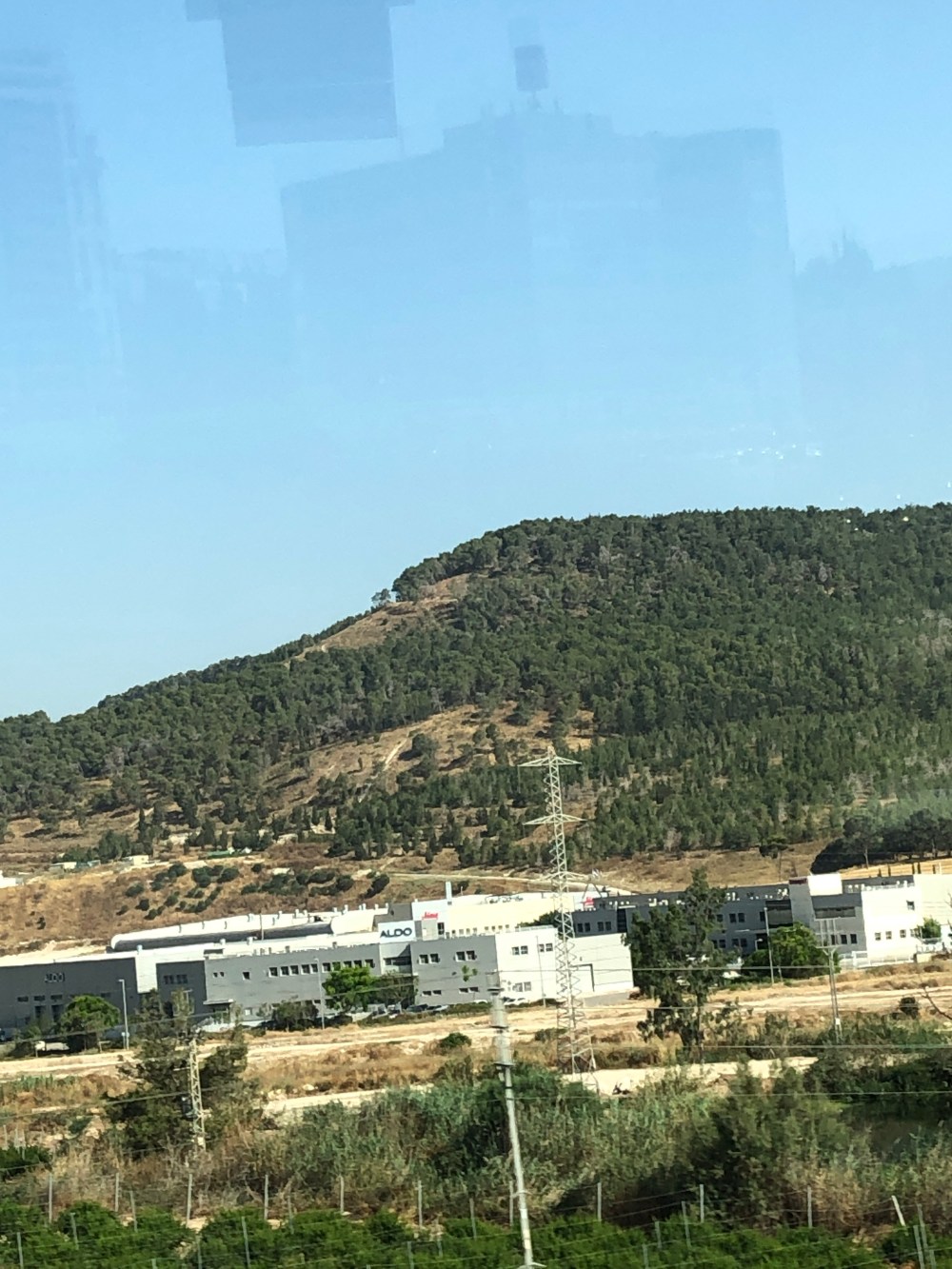
We also drove by the traditional tomb of Samson (on the hill where the trees end).
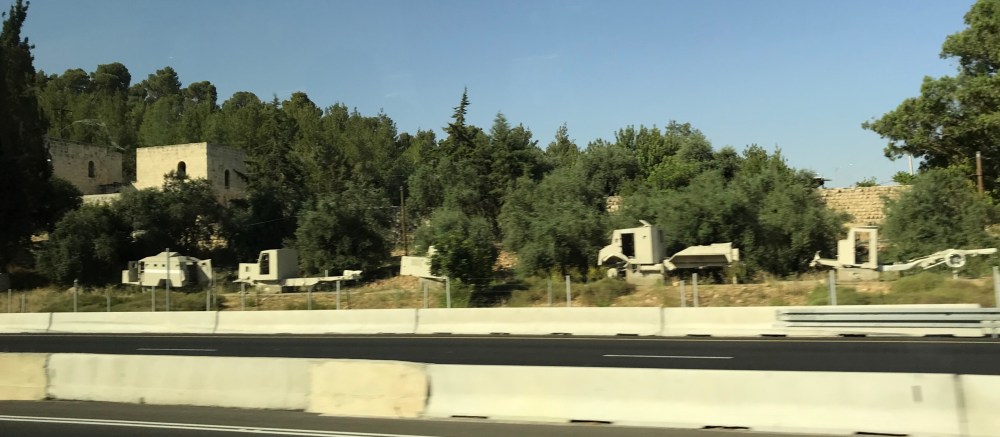
The road we traveled on was the target of a lot of attacks during the Independence War. Theses trucks took supplies to Jerusalem and were left as a memorial.
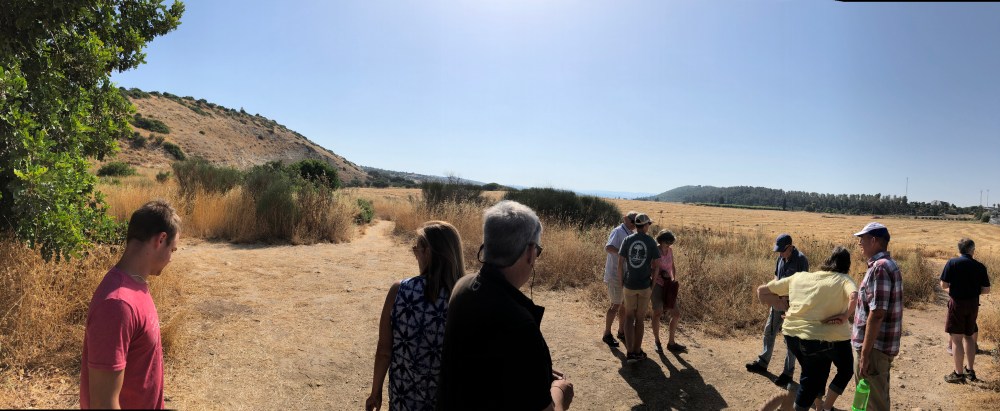
Our first stop was the Valley of Elah, where David killed Goliath! (1 Samuel 17:1-3)
It is believed that the Israelites were either in the hill on the left…
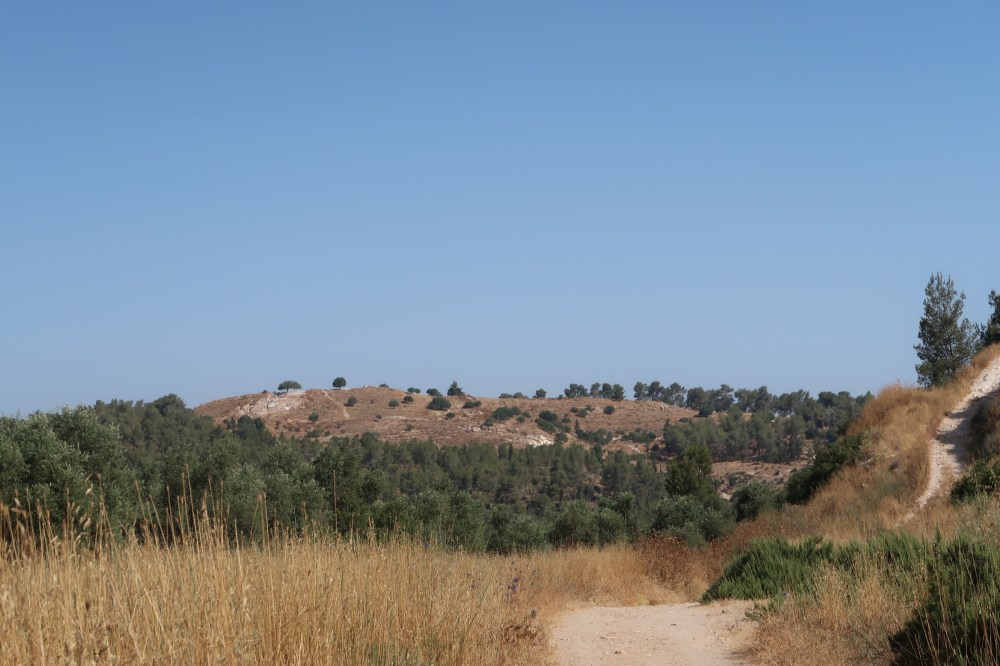
…Or this one. This one is a little more distant, but the brook runs by it as well, so either are viable options.
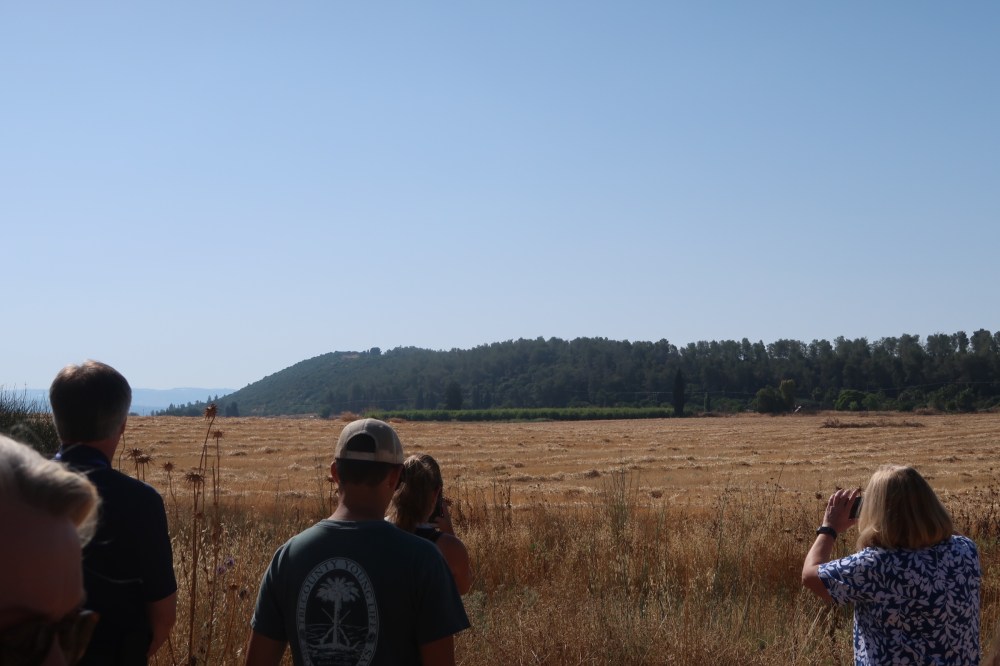
This is where the Philistines are thought to have been.
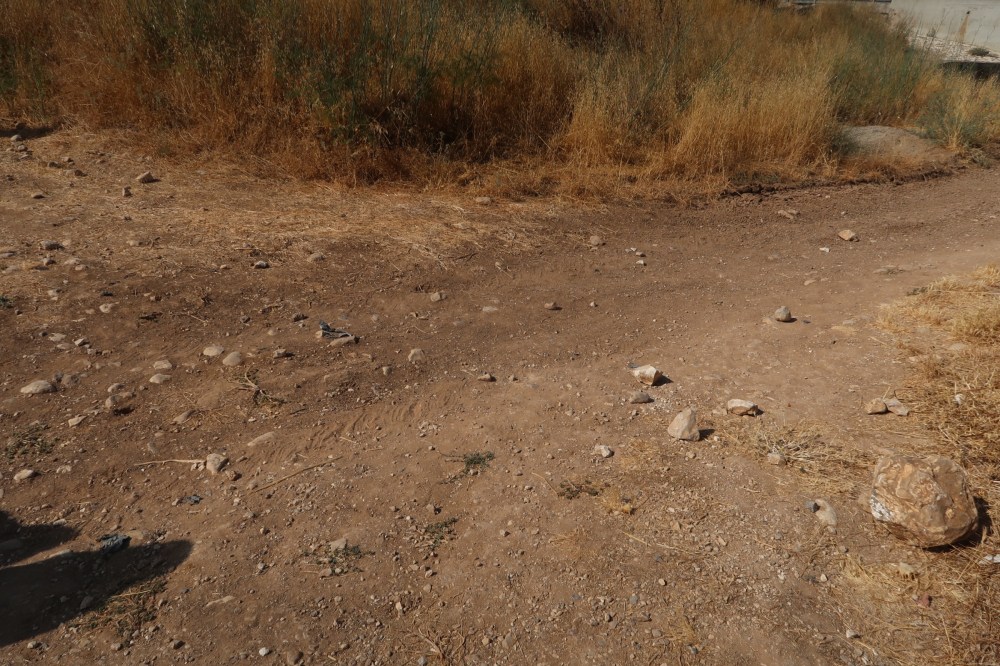
This is the brook that runs by both possible hills for the Israelites encampment and by the Philistine encampment.
It’s dried up now during this season, but water still does run through here!
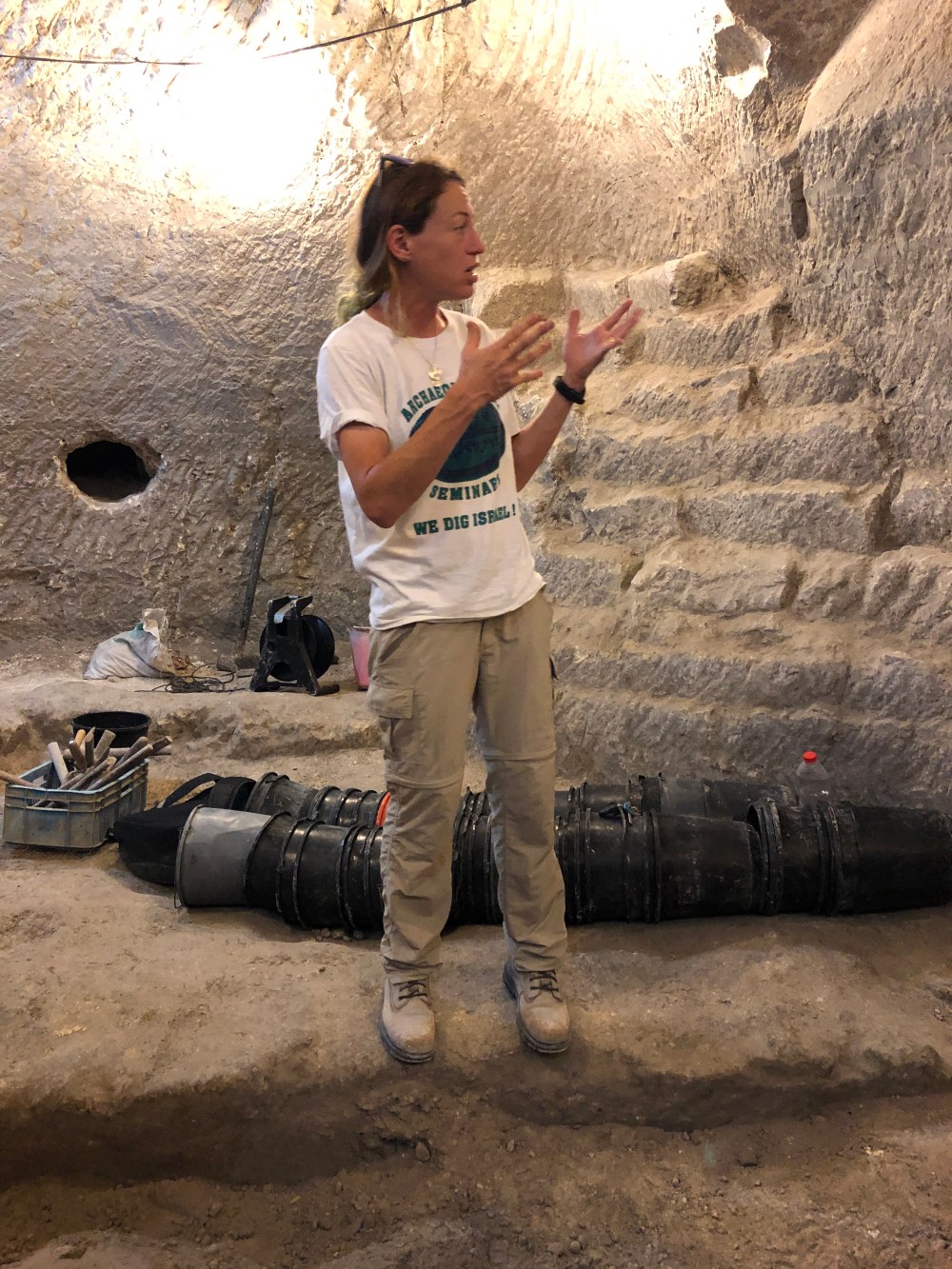
Though we stopped there, our morning mostly consisted of participating in an archaeological dig!
I’ll admit, I thought this was going to be the tourist trap of the century, but not only was it educational, it was really fun!
Our guide explained to us the history of our site. One very significant thing about it was that it’s where the only known instance of Jews coming by force and giving a people (in this case, Edomites) two options: convert to Judaism or leave.
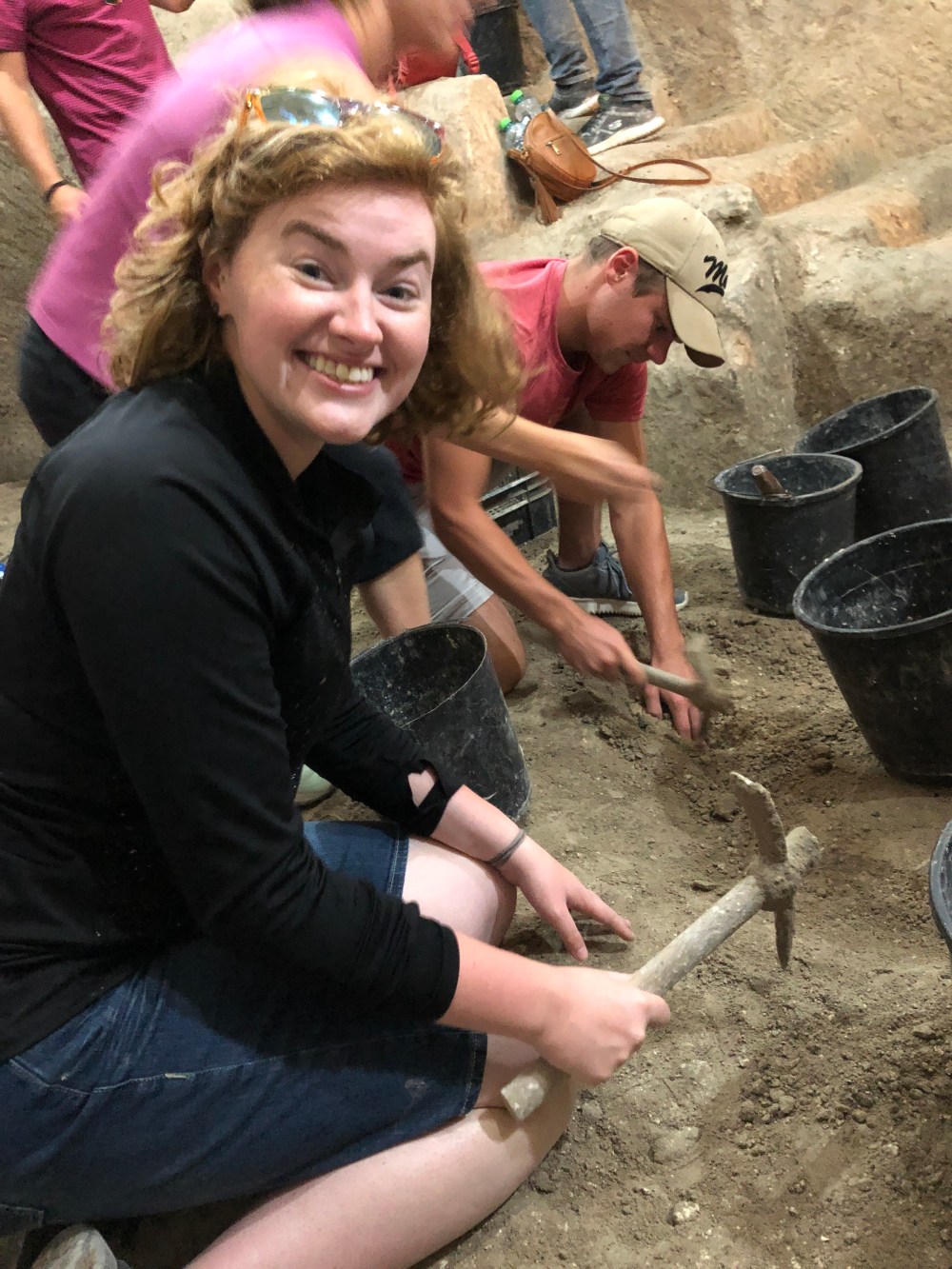
We started by dividing up into three different caves and with pick and trowel in hand, we began to dig.
Our cave was named Poppy and we had, per our guide, some museum-grade finds, including an intact bowl, a brass pin, and piece of pottery with the handle on it!
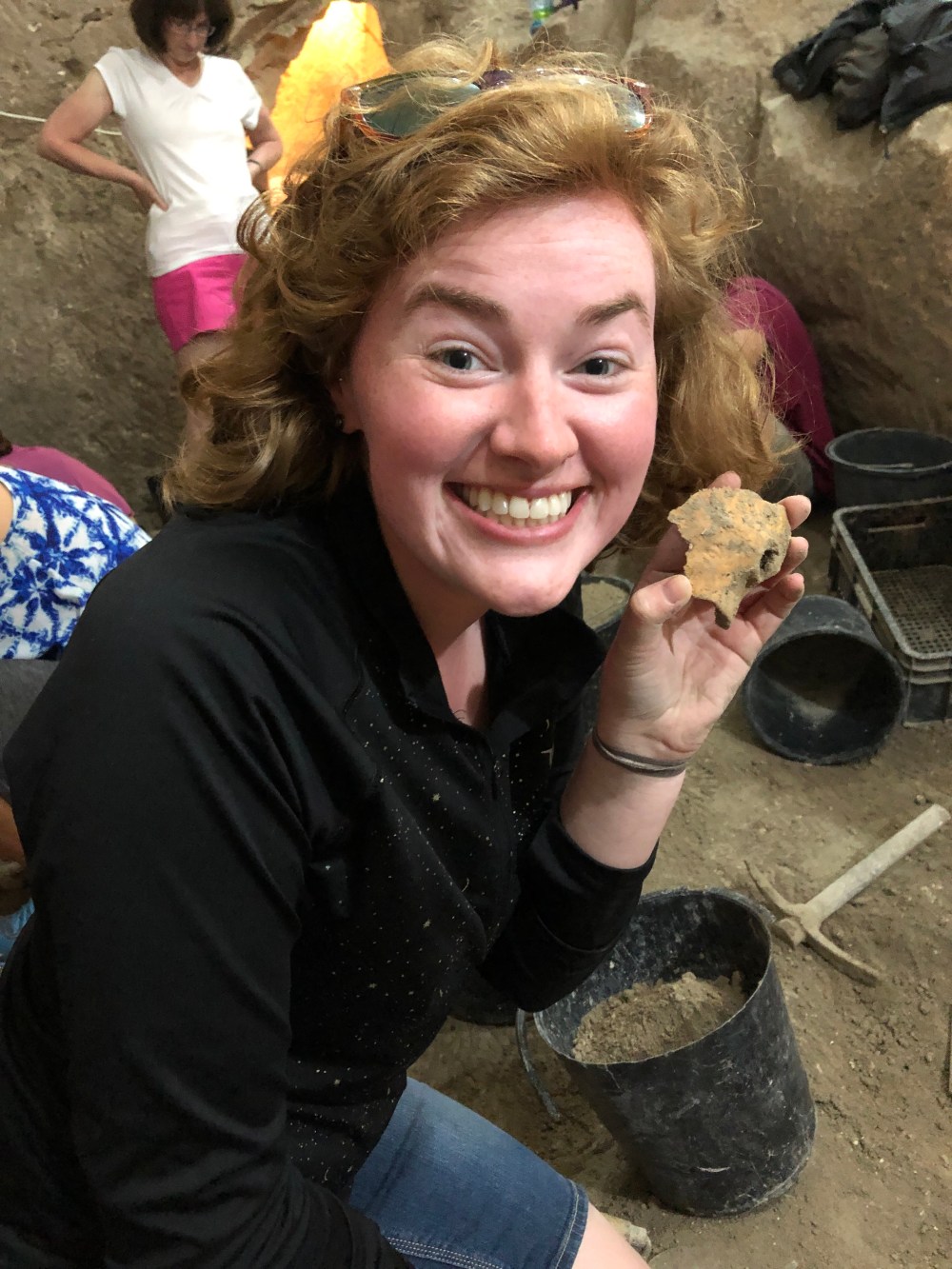
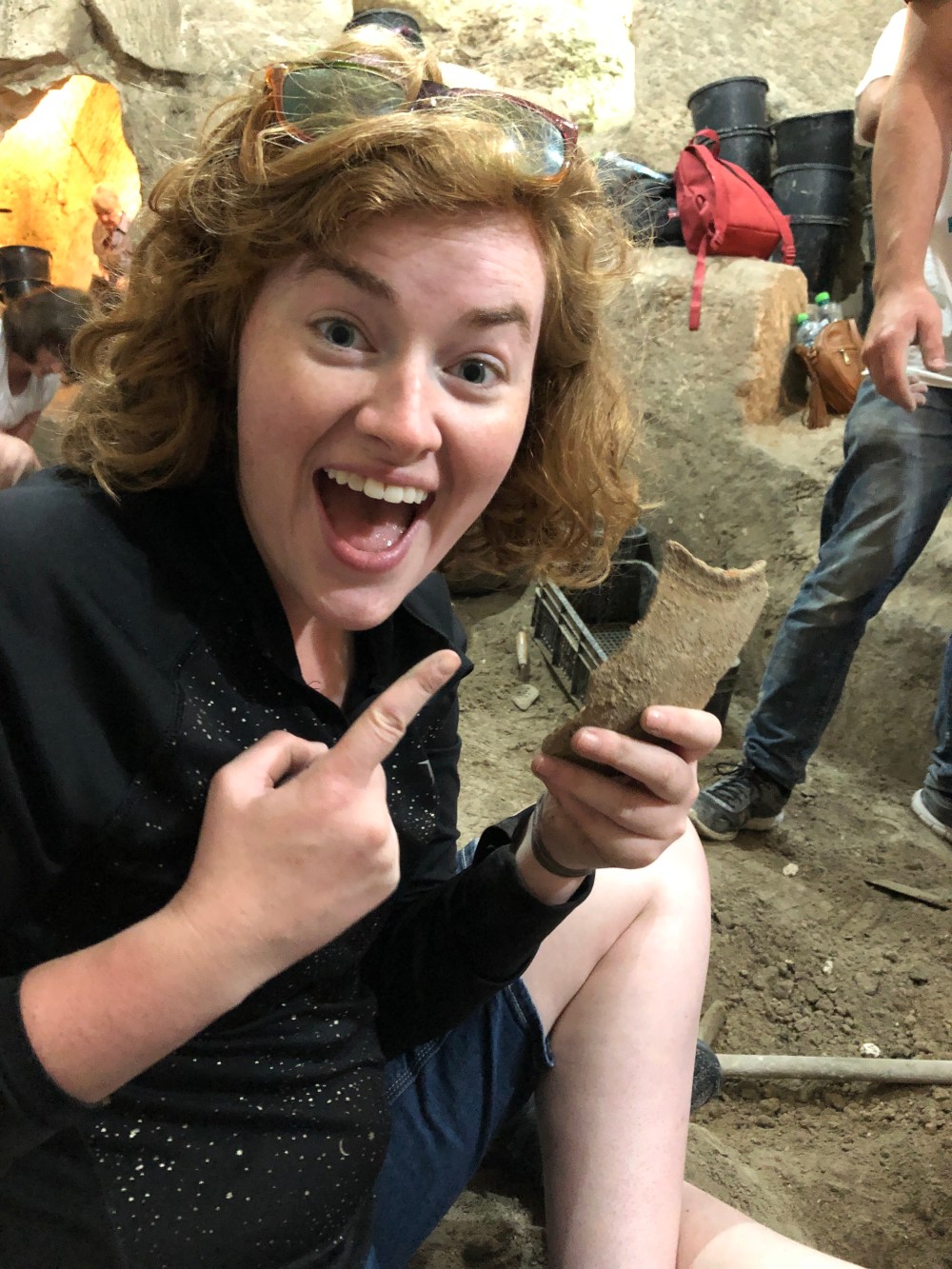
I personally found a large chunk of bone (probably animal and probably pelvis) and a large shard of pottery!
Indiana Jones, come at me.
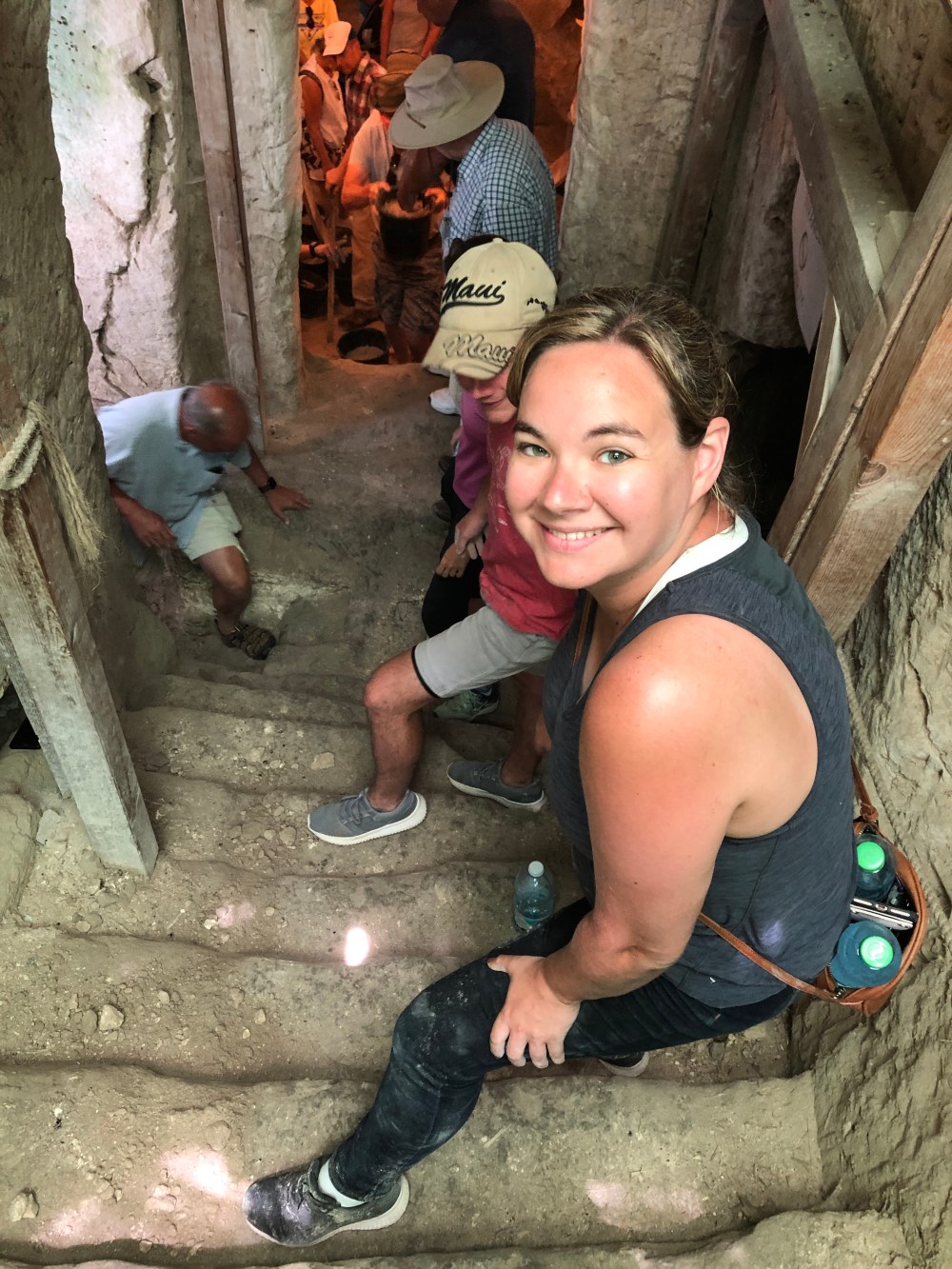
After 30 minutes of excavating, we had to schlep (did you know that’s Yiddish for “drag”/”pull”?) the buckets of dirt up out of the caves! We made a line and handed buckets to each other to the top!
We make up a pretty competitive crew, so when we were given a time limit to get them up by, by golly, we made it happen!
(We were told later that we set the record for the season for most buckets filled/sifted through…110 in total! The record for most buckets ever was set by a group of West Point cadets at 500 buckets. Typical.)
Next, we sifted through the dirt collected as we dug to make sure we didn’t miss any smaller pieces. I dumped the bucket of dirt onto the sifter, Sarah (left) and Carly (right) shook the dirt through the sifter, and Rebecca (back) helped hunt for pieces of charcoal, pottery, bone, etc.
It amazed me how much had been missed!
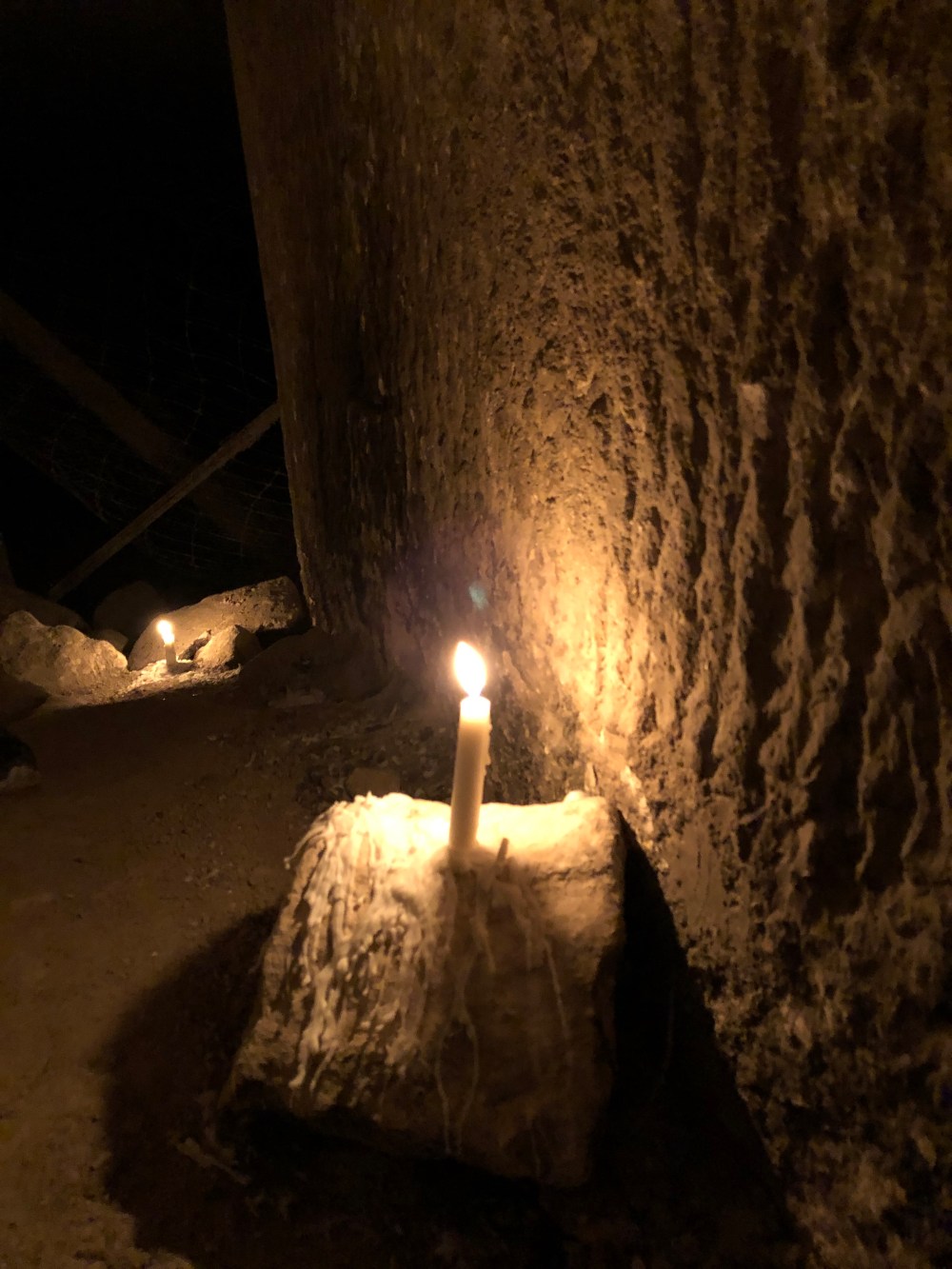
Next, those that were willing were taken through a cave that had yet to be excavated. You know I was all over that!
Only lit candles lead our way as we ducked, crawled, and shimmied our way through the caves.
These caves were where the people spent the majority of their day as a way to stay out of the heat of above ground. They not only did household duties, but also their livelihood in these caves!
The cave we crawled through had areas for the home owner’s industry: pigeons! There were holes in the wall where the pigeons roosted.
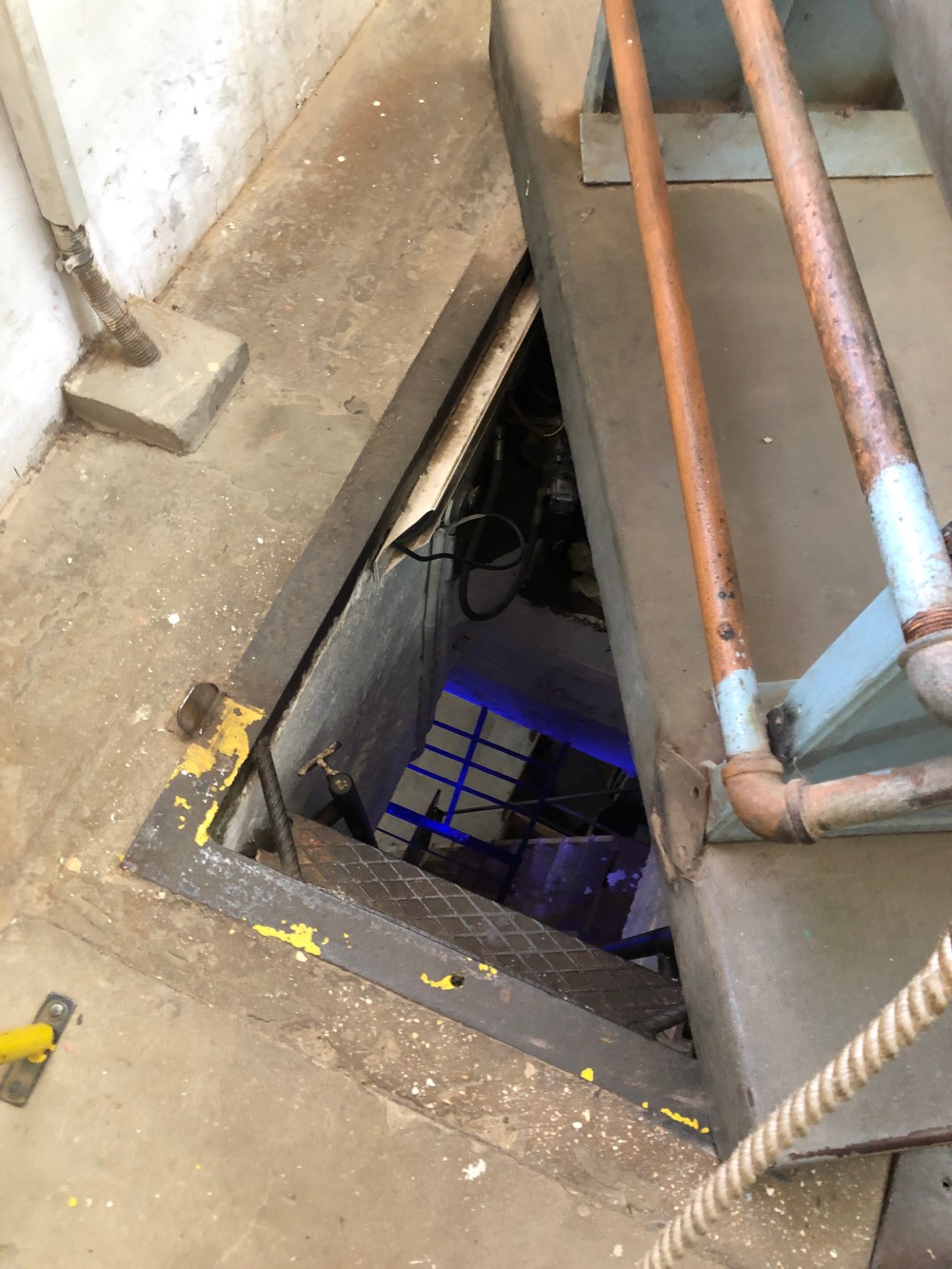
Next was Ayalon Institute, a hidden ammunition factory that was used during the British Occupation to aid in the establishment of the State of Israel from 1945-1948.
Here was one entrance, hidden under a washing machine in the laundromat.
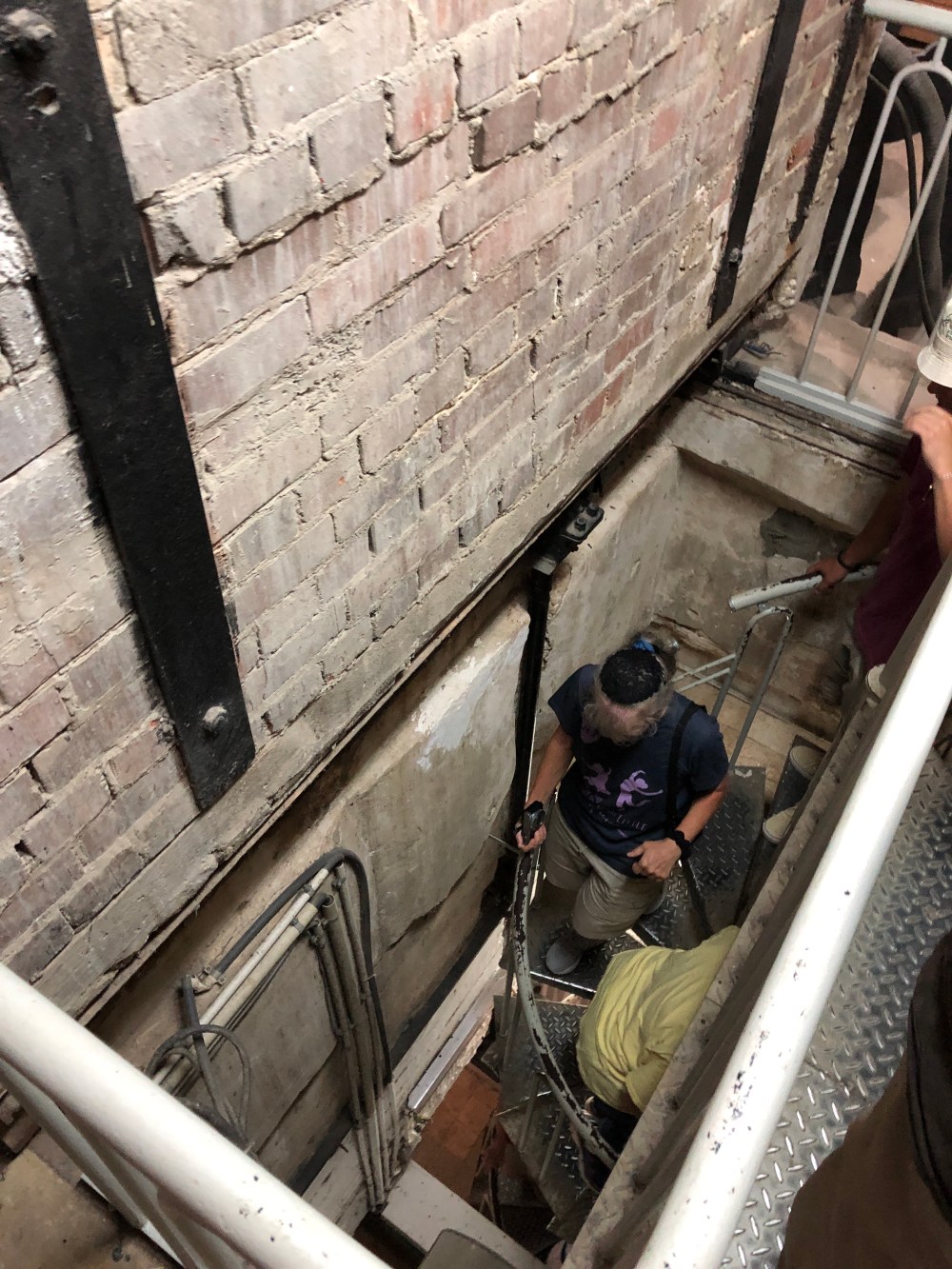
The other entrance was underneath the oven in the bakery.
Here are the original machines that were used to make the ammunition.
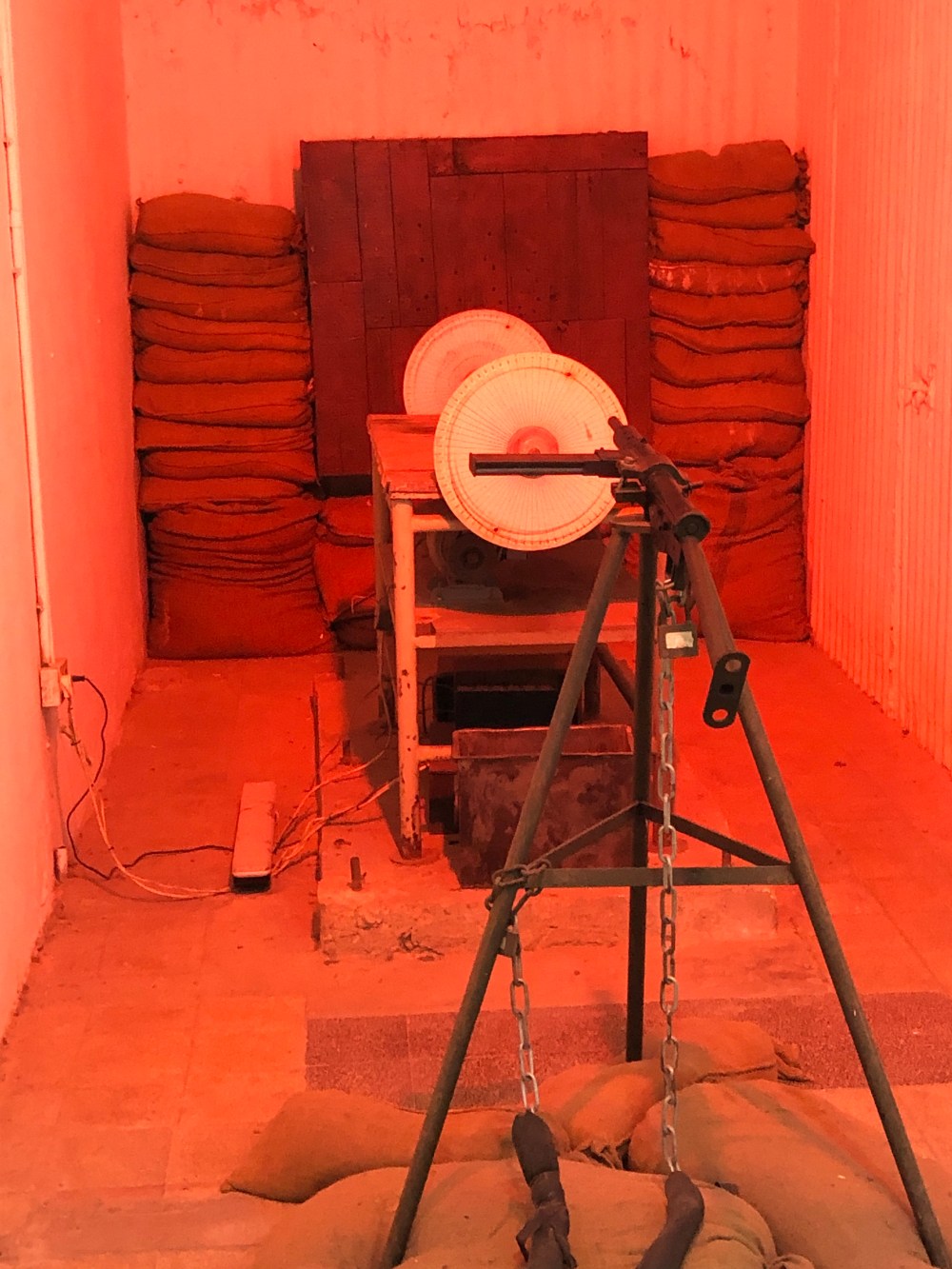
It also was tested underground!
I have a cool story about the end of the tour, but I think I’m going to save it for some final thoughts on the trip. The suspense!
Our last stop of the day was the Mahane Yehuda Market (also called “The Shuk”), which is one of the most famous food markets in the Middle East and one of Jerusalem’s main cultural centers.
It was so cool to see all the people going about their day-to-day grocery shopping and observing how different their experience is from my own.
I have been hunting for a journal for this whole trip and nabbed one minutes from us leaving! Booyah!
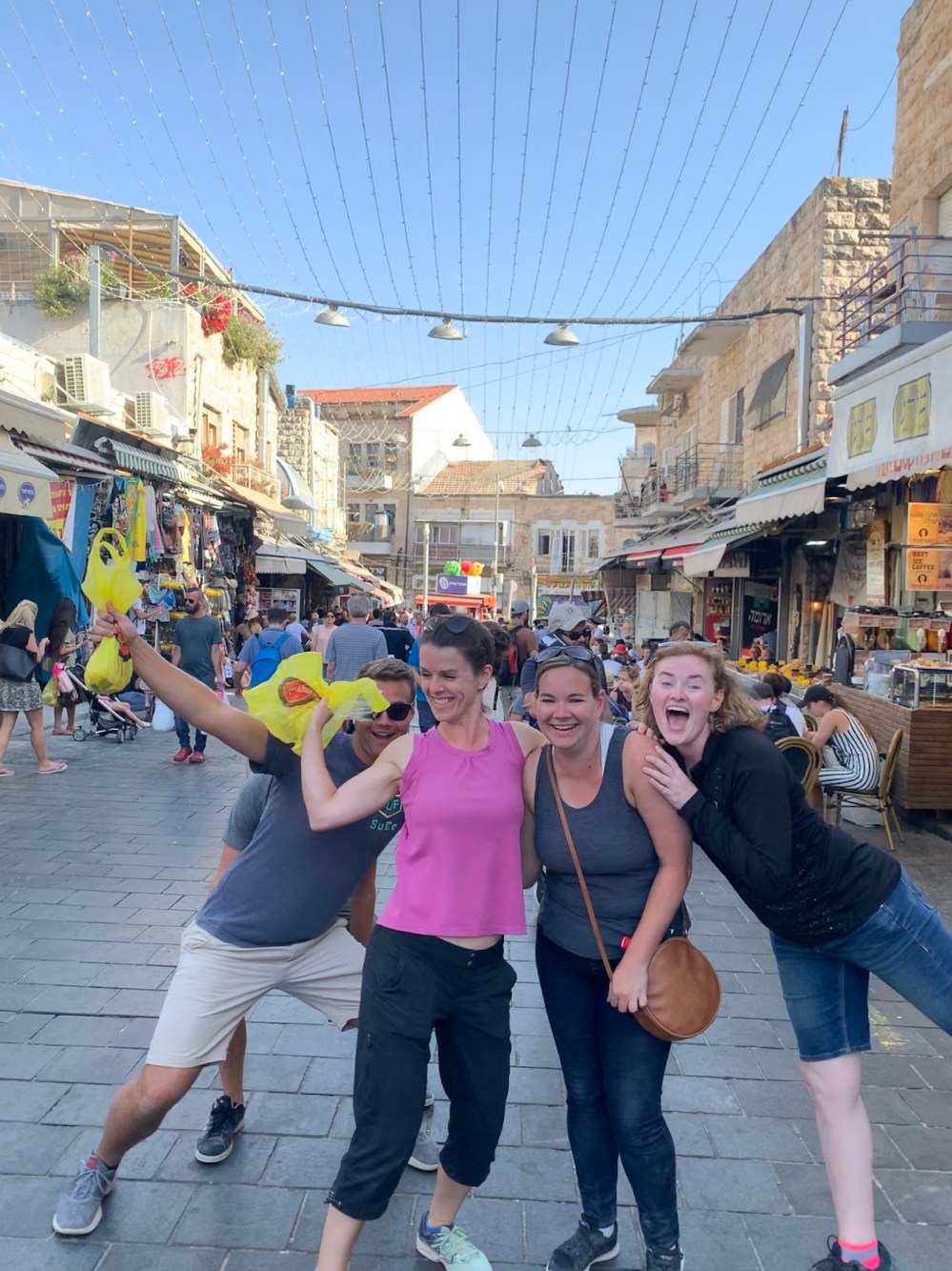
As you can clearly see, we have a hard time getting along and fun is severely lacking.
 Sightseeing Sonographer